Monthly monitoring
Introduction
Global climate indicators (for an overview see Trewin et al. 2021) provide a broad view of climate change at the largest scale, encompassing the composition of the atmosphere, energy changes, and the responses of the land, ocean, and ice. These indicators are closely related to one another. For example, the rise in CO2 and other greenhouse gases in the atmosphere leads to an imbalance of energy and thus warming of the atmosphere and ocean. Warming of the ocean in turn leads to rising sea levels, to which is added the melting of ice on land in response to increasing atmospheric temperatures.
The global indicators draw on a wide range of data sets, which are listed at the bottom of the page. Differences between data sets for the same indicator indicate the degree of uncertainty in the indicator. Figures are updated monthly, with some data sets being updated more or less frequently.
Under each of the figures, you will find links to the images in multiple file formats (png, pdf and svg), as well as a set of data as shown in the figure in a common comma-separated values (csv) format. The "Read more" link will take you to a wider range of linked indicators.
Key messages
Dataset and processing details
Carbon dioxide
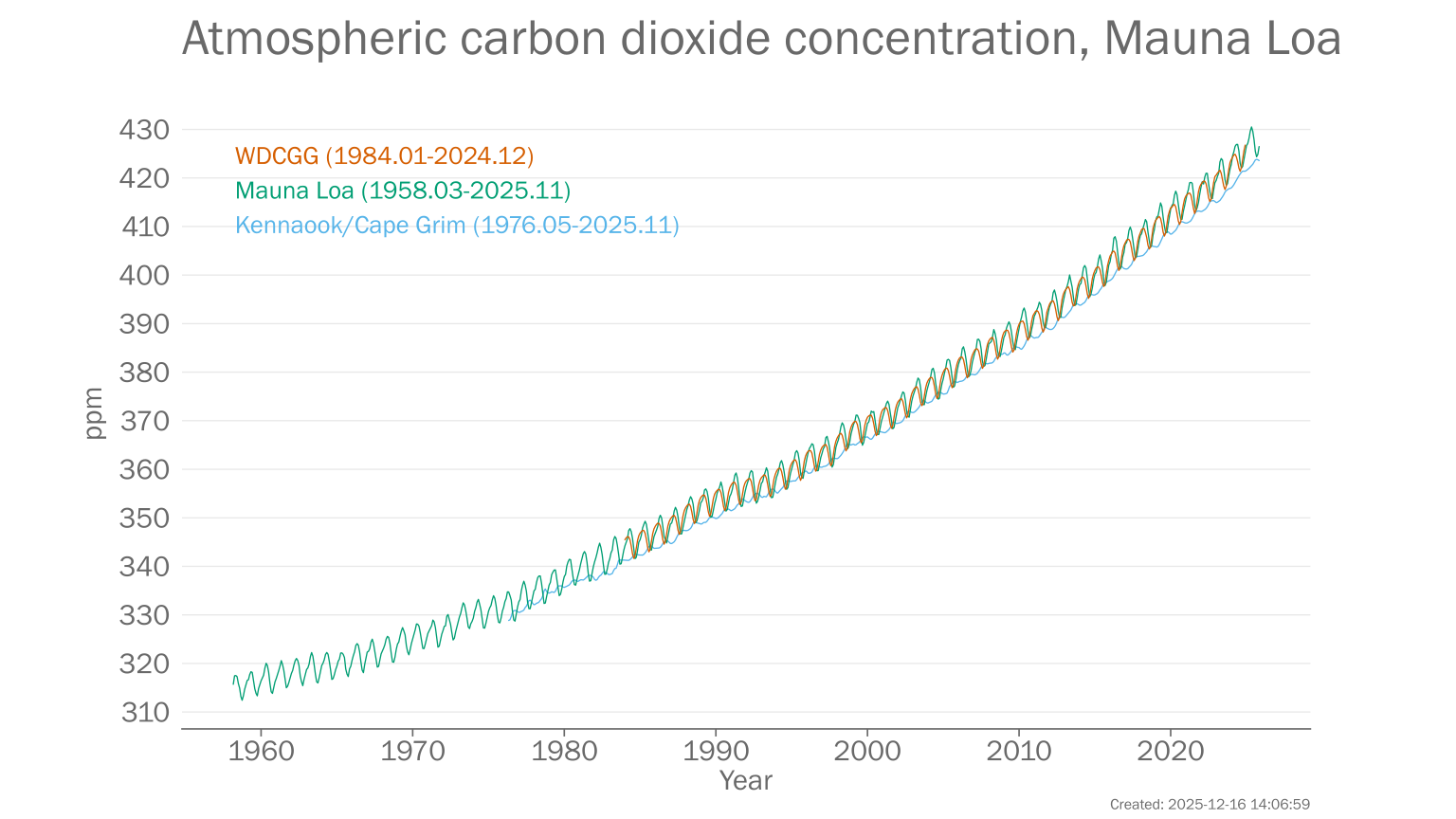
Carbon dioxide (CO2) is one of the most important greenhouse gases. The concentration of CO2 in the atmosphere is measured at stations around the world which are combined to provide a globally representative value.
The data in the above plot are available in a zip file containing a csv file for each data set.
Data file: Carbon_dioxide_data_files.zip
Checksum: ec4657f7e35e6d0081c800058f0af627
Format: BADC CSV format
Kennaook/Cape Grim
Original data file (external link)
Data citation: https://www.csiro.au/greenhouse-gases/
Acknowledgement: https://www.csiro.au/greenhouse-gases/ Data measured at the Kennaook / Cape Grim Baseline Air Pollution Station (KCGBAPS), located near the north-west tip of Tasmania, Australia. KCGBAPS is funded and managed by the Australian Bureau of Meteorology, and the scientific program is jointly supervised with CSIRO Oceans & Atmosphere
To produce the plot, the following processing steps were performed:
- Data set created from file ['CapeGrim_CO2_data_download.csv'] downloaded from ['https://capegrim.csiro.au/GreenhouseGas/data/CapeGrim_CO2_data_download.csv'] at ['2026-01-05 11:07:45']
Mauna Loa
Original data file (external link)
Citation:
Acknowledgement: Dr. Pieter Tans, NOAA/ESRL (www.esrl.noaa.gov/gmd/ccgg/trends/) and Dr. Ralph Keeling, Scripps Institution of Oceanography (scrippsco2.ucsd.edu/).
To produce the plot, the following processing steps were performed:
- Data set created from file ['co2_mm_mlo.txt'] downloaded from ['ftp://aftp.cmdl.noaa.gov/products/trends/co2/co2_mm_mlo.txt'] at ['2026-01-05 11:07:47']
WDCGG
Original data file (external link)
Citation:
To produce the plot, the following processing steps were performed:
- Data set created from file ['co2_monthly_20251016.csv'] downloaded from ['https://gaw.kishou.go.jp/static/publications/global_mean_mole_fractions/2025/co2_monthly_20251016.csv'] at ['2025-10-17 10:10:37']
Methane
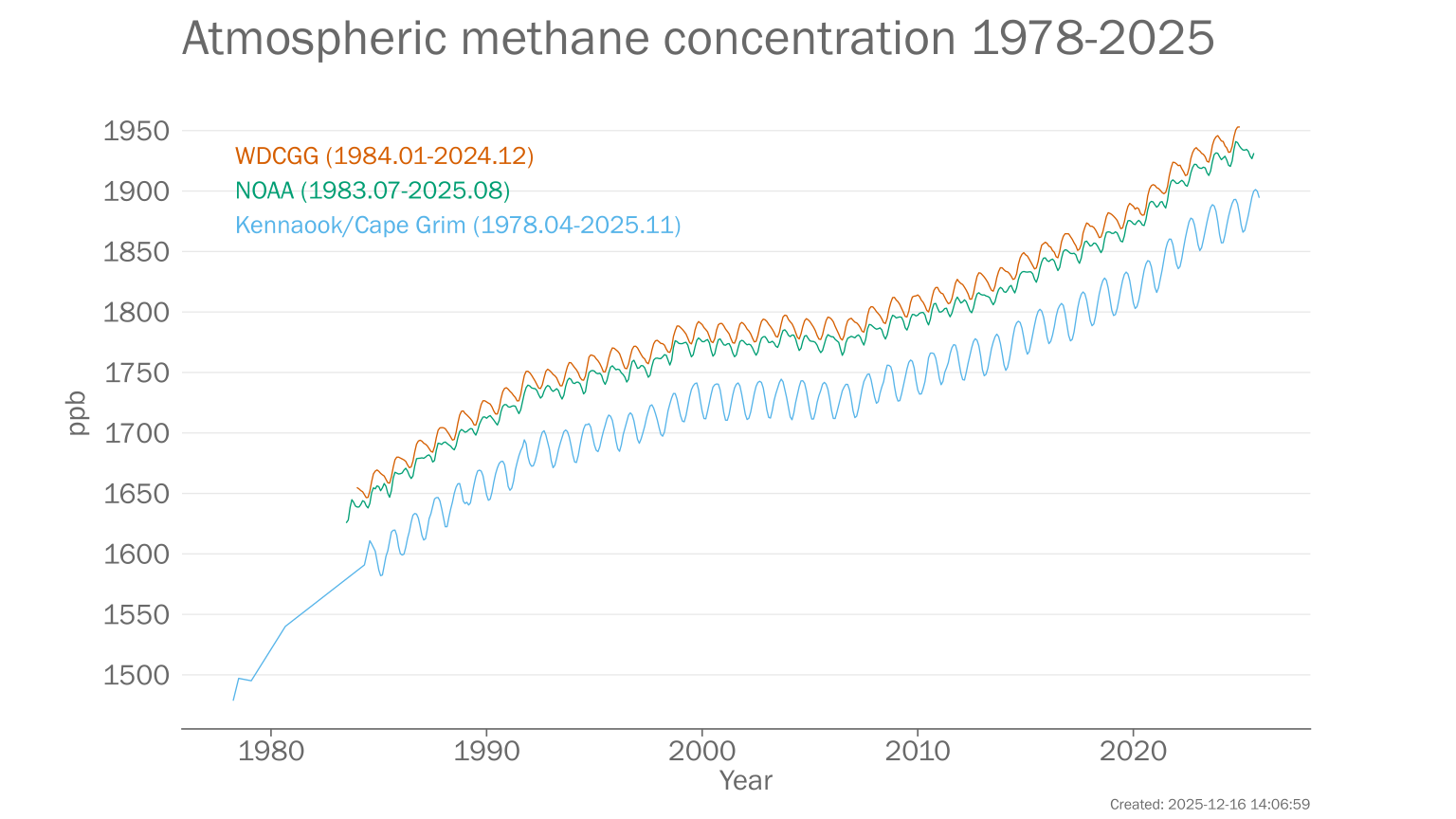
Methane (CH4) is an important greenhouse gas. The concentration of CH4 in the atmosphere is measured at stations around the world which are combined to provide a globally representative value.
The data in the above plot are available in a zip file containing a csv file for each data set.
Data file: Methane_data_files.zip
Checksum: e18ccff523937ab8335546790f32ac71
Format: BADC CSV format
Kennaook/Cape Grim
Original data file (external link)
Data citation: https://www.csiro.au/greenhouse-gases/
Acknowledgement: https://www.csiro.au/greenhouse-gases/ Data measured at the Kennaook / Cape Grim Baseline Air Pollution Station (KCGBAPS), located near the north-west tip of Tasmania, Australia. KCGBAPS is funded and managed by the Australian Bureau of Meteorology, and the scientific program is jointly supervised with CSIRO Oceans & Atmosphere
To produce the plot, the following processing steps were performed:
- Data set created from file ['CapeGrim_CH4_data_download.csv'] downloaded from ['https://capegrim.csiro.au/GreenhouseGas/data/CapeGrim_CH4_data_download.csv'] at ['2026-01-05 11:07:50']
NOAA
Original data file (external link)
Citation:
Data citation: Ed Dlugokencky, NOAA/ESRL (www.esrl.noaa.gov/gmd/ccgg/trends_ch4/)
Acknowledgement: Ed Dlugokencky, NOAA/ESRL (www.esrl.noaa.gov/gmd/ccgg/trends_ch4/)
To produce the plot, the following processing steps were performed:
- Data set created from file ['ch4_mm_gl.txt'] downloaded from ['ftp://aftp.cmdl.noaa.gov/products/trends/ch4/ch4_mm_gl.txt'] at ['2026-01-05 11:07:51']
WDCGG
Original data file (external link)
Citation:
To produce the plot, the following processing steps were performed:
- Data set created from file ['ch4_monthly_20251016.csv'] downloaded from ['https://gaw.kishou.go.jp/static/publications/global_mean_mole_fractions/2025/ch4_monthly_20251016.csv'] at ['2025-10-17 10:10:24']
Nitrous Oxide
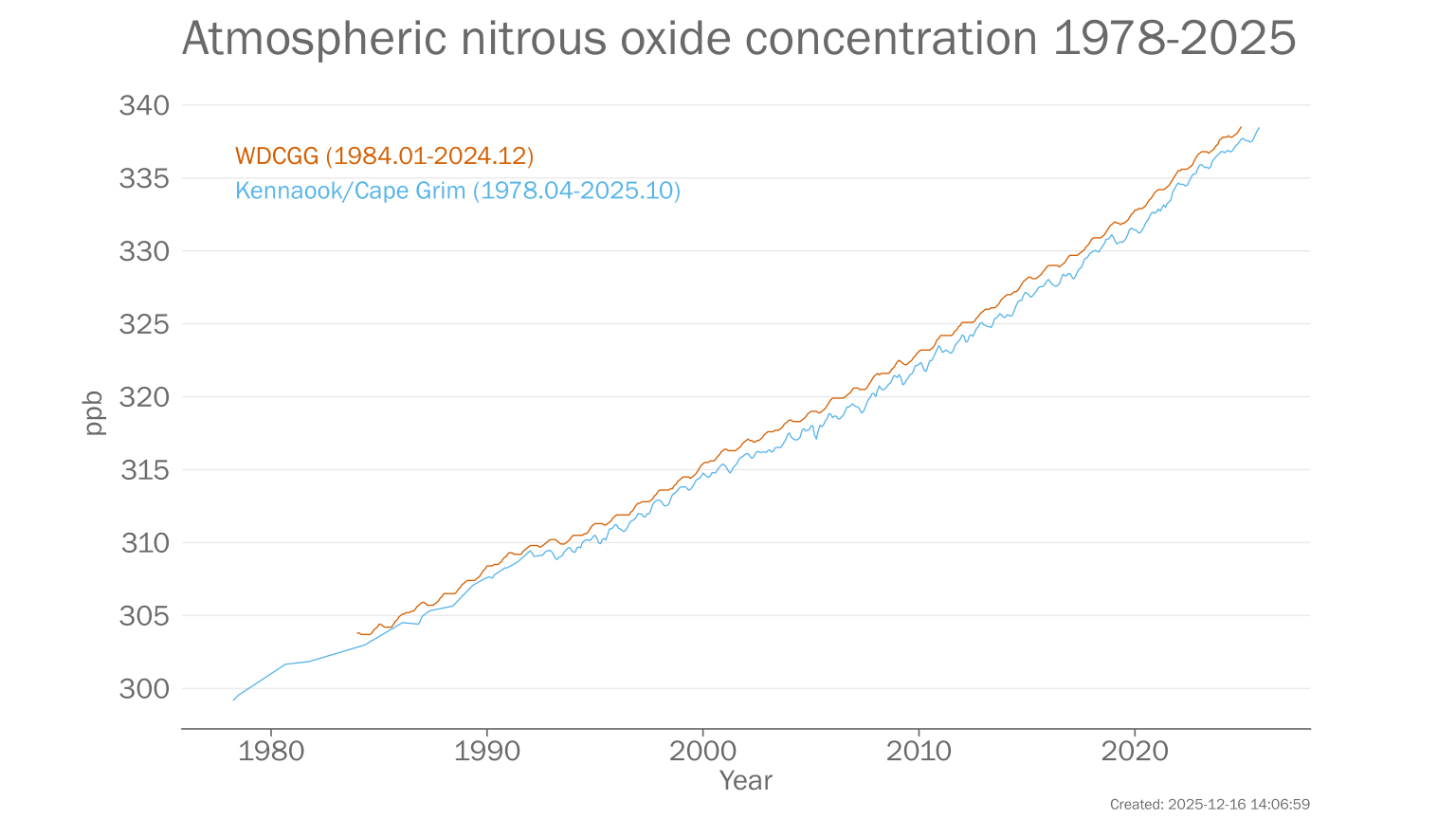
Nitrous oxide (N2O) is an important greenhouse gas. The concentration of N2O in the atmosphere is measured at stations around the world which are combined to provide a globally representative value.
The data in the above plot are available in a zip file containing a csv file for each data set.
Data file: Nitrous_Oxide_data_files.zip
Checksum: c3896a3afbcb7c0c0904ce5ace270415
Format: BADC CSV format
Kennaook/Cape Grim
Original data file (external link)
Data citation: https://www.csiro.au/greenhouse-gases/
Acknowledgement: https://www.csiro.au/greenhouse-gases/ Data measured at the Kennaook / Cape Grim Baseline Air Pollution Station (KCGBAPS), located near the north-west tip of Tasmania, Australia. KCGBAPS is funded and managed by the Australian Bureau of Meteorology, and the scientific program is jointly supervised with CSIRO Oceans & Atmosphere
To produce the plot, the following processing steps were performed:
- Data set created from file ['CapeGrim_N2O_data_download.csv'] downloaded from ['https://capegrim.csiro.au/GreenhouseGas/data/CapeGrim_N2O_data_download.csv'] at ['2026-01-05 11:07:54']
WDCGG
Original data file (external link)
Citation:
To produce the plot, the following processing steps were performed:
- Data set created from file ['n2o_monthly_20251016.csv'] downloaded from ['https://gaw.kishou.go.jp/static/publications/global_mean_mole_fractions/2025/n2o_monthly_20251016.csv'] at ['2025-10-17 10:10:47']
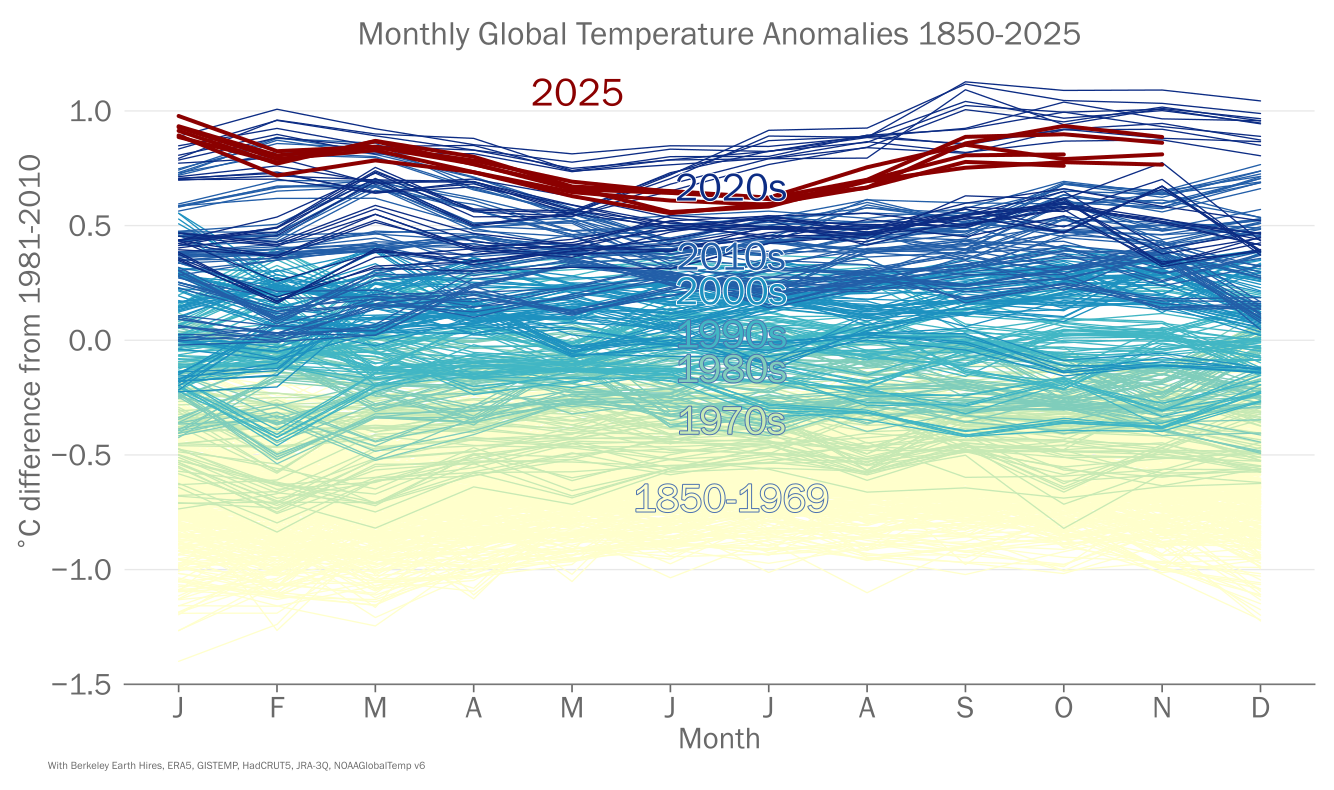
Monthly global temperature
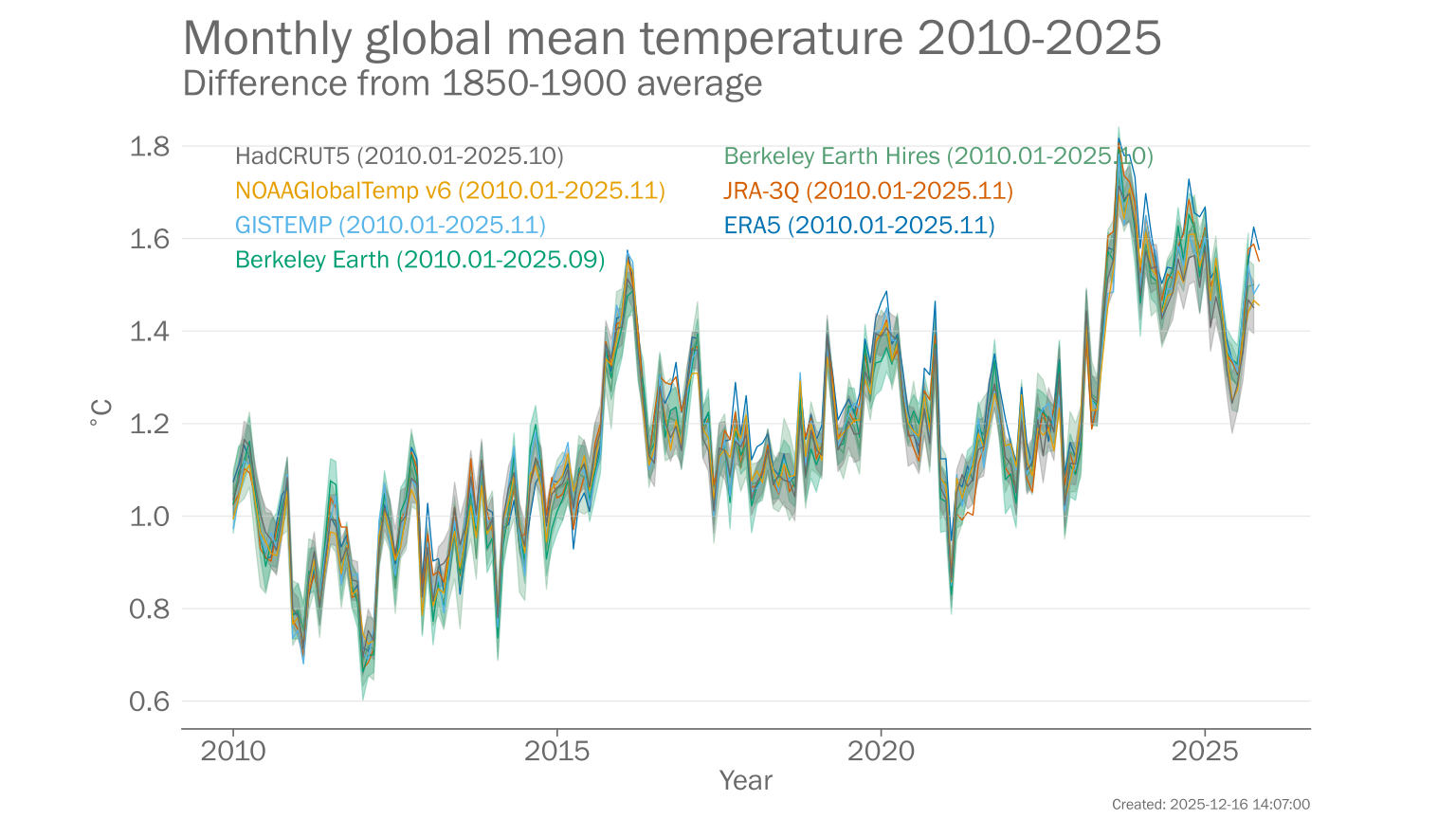
Global mean temperature is based on measurements made at weather stations over land and by ships and buoys over the ocean. Temperatures are typically expressed as anomalies which are temperature differences from the average for a standard period. Here, 1850-1900 is used for the global mean. Instrumental temperature records are some of the longest climate records available, with some series extending back to the 17th century.
The data in the above plot are available in a zip file containing a csv file for each data set.
Data file: Monthly_global_temperature_data_files.zip
Checksum: 9b24fcf76804b2d70287563c1179c46f
Format: BADC CSV format
Berkeley Earth
Citation:
To produce the plot, the following processing steps were performed:
- Data set created from file ['Global Temperatures Collab.csv'] downloaded from [] at ['2026-01-12 16:19:43']
- Rebaselined to 1981-2010 for each month separately by calculating the arithmetic mean of the data over the baseline period and subtracting the mean from all data values. This is done for each month separately (Januarys, Februarys etc).
- Added offset of 0.69 to all data values.
- Manually changed baseline to 1850-1900. Note that data values remain unchanged.
- Selected years within the range 2010 to 2025.
CMST
Citation:
Data citation: Sun Wenbin; Qingxiang, Li (2021): China global Merged surface temperature 2.0 during 1850-2020. figshare. Dataset. https://doi.org/10.6084/m9.figshare.16929427.v4
To produce the plot, the following processing steps were performed:
- Data set created from file ['Global Temperatures Collab.csv'] downloaded from [] at ['2026-01-12 16:19:43']
- Rebaselined to 1981-2010 for each month separately by calculating the arithmetic mean of the data over the baseline period and subtracting the mean from all data values. This is done for each month separately (Januarys, Februarys etc).
- Added offset of 0.69 to all data values.
- Manually changed baseline to 1850-1900. Note that data values remain unchanged.
- Selected years within the range 2010 to 2025.
DCENT-I
Citations:
- Chan, D., Gebbie, G., Huybers, P. & Kent, E. C. DCENT: Dynamically Consistent ENsemble of Temperature at the Earth Surface. https://doi.org/10.7910/DVN/NU4UGW (2024)..
- Chan, D., Chan, S. C., Siddons, J. T., Cable, A., Cornes, R. C., Kent, E. C., Gebbie, G., & Huybers, P. DCENT-I: A Globally Infilled Extension of the Dynamically Consistent ENsemble of Temperature Dataset. https://doi.org/10.7910/DVN/ZY0WM8 (2025)..
To produce the plot, the following processing steps were performed:
- Data set created from file ['Global Temperatures Collab.csv'] downloaded from [] at ['2026-01-12 16:19:43']
- Rebaselined to 1981-2010 for each month separately by calculating the arithmetic mean of the data over the baseline period and subtracting the mean from all data values. This is done for each month separately (Januarys, Februarys etc).
- Added offset of 0.69 to all data values.
- Manually changed baseline to 1850-1900. Note that data values remain unchanged.
- Selected years within the range 2010 to 2025.
ERA5
Citation:
Data citation: Hersbach, H., Bell, B., Berrisford, P., Biavati, G., Horányi, A., Muñoz Sabater, J., Nicolas, J., Peubey, C., Radu, R., Rozum, I., Schepers, D., Simmons, A., Soci, C., Dee, D., Thépaut, J-N. (2023): ERA5 monthly averaged data on single levels from 1940 to present. Copernicus Climate Change Service (C3S) Climate Data Store (CDS), DOI: 10.24381/cds.f17050d7 (Accessed on 2026-01-12 16:19:43)
Acknowledgement: Contains using Copernicus Climate Change Service information [2026]. Neither the European Commission nor ECMWF is responsible for any use that may be made of the Copernicus information or data it contains.
To produce the plot, the following processing steps were performed:
- Data set created from file ['Global Temperatures Collab.csv'] downloaded from [] at ['2026-01-12 16:19:43']
- Rebaselined to 1981-2010 for each month separately by calculating the arithmetic mean of the data over the baseline period and subtracting the mean from all data values. This is done for each month separately (Januarys, Februarys etc).
- Added offset of 0.69 to all data values.
- Manually changed baseline to 1850-1900. Note that data values remain unchanged.
- Selected years within the range 2010 to 2025.
GISTEMP
Citation:
Data citation: GISTEMP Team, 2022: GISS Surface Temperature Analysis (GISTEMP), version 4. NASA Goddard Institute for Space Studies. Dataset accessed 2026-01-12 18:25:53 at data.giss.nasa.gov/gistemp/.
To produce the plot, the following processing steps were performed:
- Data set created from file ['Global Temperatures Collab.csv'] downloaded from [] at ['2026-01-12 18:25:53']
- Rebaselined to 1981-2010 for each month separately by calculating the arithmetic mean of the data over the baseline period and subtracting the mean from all data values. This is done for each month separately (Januarys, Februarys etc).
- Added offset of 0.69 to all data values.
- Manually changed baseline to 1850-1900. Note that data values remain unchanged.
- Selected years within the range 2010 to 2025.
HadCRUT5
Citation:
Acknowledgement: HadCRUT.5.1.0.0 data were obtained from http://www.metoffice.gov.uk/hadobs/hadcrut5 on 2026-01-12 16:19:43 and are © British Crown Copyright, Met Office 2026, provided under an Open Government License, http://www.nationalarchives.gov.uk/doc/open-government-licence/version/3/
To produce the plot, the following processing steps were performed:
- Data set created from file ['Global Temperatures Collab.csv'] downloaded from [] at ['2026-01-12 16:19:43']
- Rebaselined to 1981-2010 for each month separately by calculating the arithmetic mean of the data over the baseline period and subtracting the mean from all data values. This is done for each month separately (Januarys, Februarys etc).
- Added offset of 0.69 to all data values.
- Manually changed baseline to 1850-1900. Note that data values remain unchanged.
- Selected years within the range 2010 to 2025.
JRA-3Q
Citation:
Data citation: Japan Meteorological Agency. 2023, updated monthly. Japanese Reanalysis for Three Quarters of a Century (JRA-3Q). Research Data Archive at the National Center for Atmospheric Research, Computational and Information Systems Laboratory. https://doi.org/10.5065/AVTZ-1H78. Accessed 2026-01-12 16:19:43.
To produce the plot, the following processing steps were performed:
- Data set created from file ['Global Temperatures Collab.csv'] downloaded from [] at ['2026-01-12 16:19:43']
- Rebaselined to 1981-2010 for each month separately by calculating the arithmetic mean of the data over the baseline period and subtracting the mean from all data values. This is done for each month separately (Januarys, Februarys etc).
- Added offset of 0.69 to all data values.
- Manually changed baseline to 1850-1900. Note that data values remain unchanged.
- Selected years within the range 2010 to 2025.
NOAAGlobalTemp v6
Citation:
Data citation: Huang, Boyin; Yin, Xungang; Menne, Matthew J.; Vose, Russell S.; and Zhang, Huai-Min. 2024. NOAA Global Surface Temperature Dataset (NOAAGlobalTemp), Version 6.0.. NOAA National Centers for Environmental Information. https://doi.org/10.25921/rzxg-p717. Accessed 2026-01-12 16:19:43.
To produce the plot, the following processing steps were performed:
- Data set created from file ['Global Temperatures Collab.csv'] downloaded from [] at ['2026-01-12 16:19:43']
- Rebaselined to 1981-2010 for each month separately by calculating the arithmetic mean of the data over the baseline period and subtracting the mean from all data values. This is done for each month separately (Januarys, Februarys etc).
- Added offset of 0.69 to all data values.
- Manually changed baseline to 1850-1900. Note that data values remain unchanged.
- Selected years within the range 2010 to 2025.
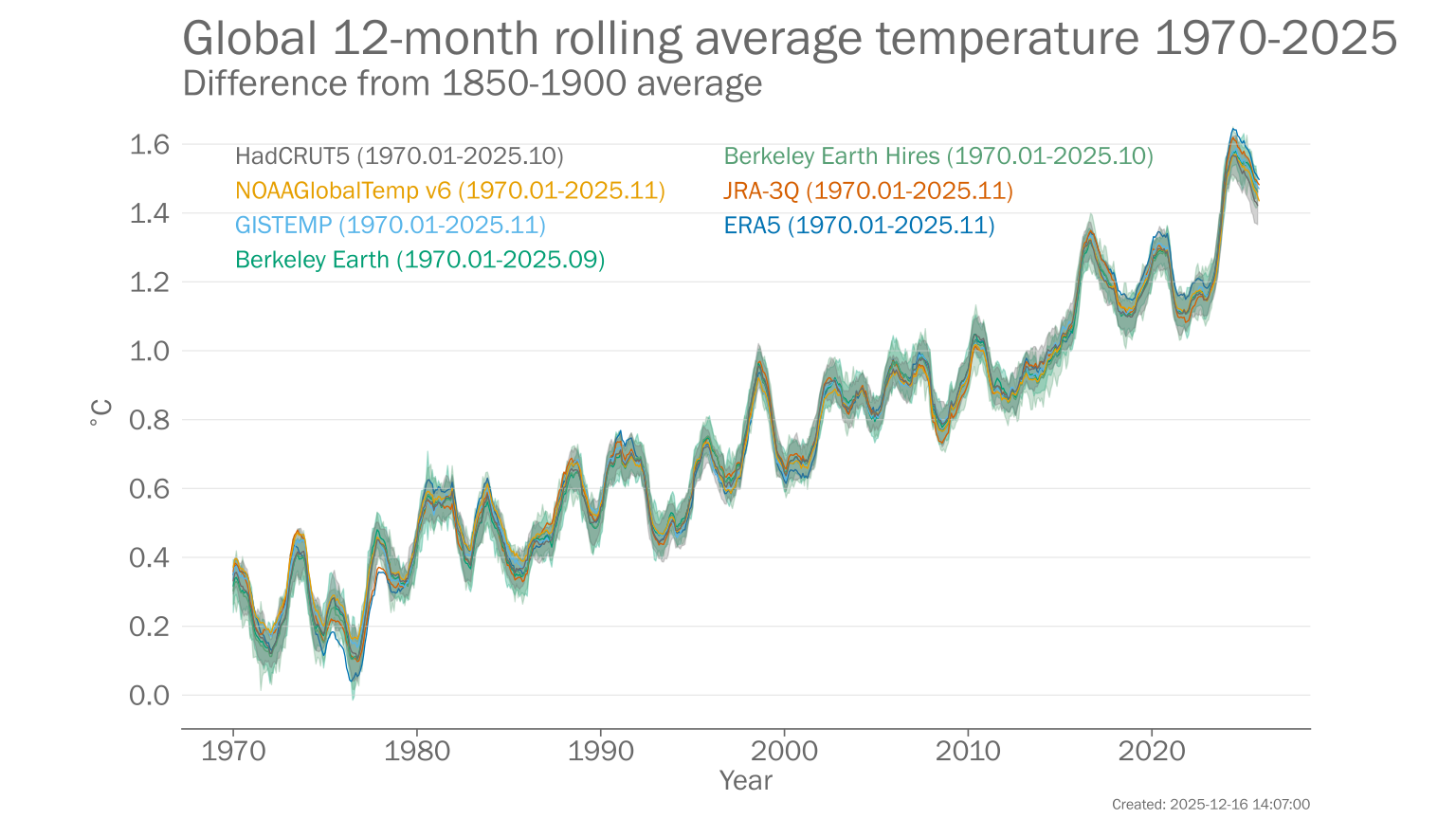
Global 12-month temperature
Global mean temperature is based on measurements made at weather stations over land and by ships and buoys over the ocean. Temperatures are typically expressed as anomalies which are temperature differences from the average for a standard period. Here, 1850-1900 is used for the global mean. Instrumental temperature records are some of the longest climate records available, with some series extending back to the 17th century.
The data in the above plot are available in a zip file containing a csv file for each data set.
Data file: Global_12-month_temperature_data_files.zip
Checksum: d1c9b03fcba310c6e7357f3aa204bcdf
Format: BADC CSV format
Berkeley Earth
Citation:
To produce the plot, the following processing steps were performed:
- Data set created from file ['Global Temperatures Collab.csv'] downloaded from [] at ['2026-01-12 16:19:43']
- Rebaselined to 1981-2010 for each month separately by calculating the arithmetic mean of the data over the baseline period and subtracting the mean from all data values. This is done for each month separately (Januarys, Februarys etc).
- Calculated 12-month trailing moving average
- Added offset of 0.69 to all data values.
- Manually changed baseline to 1850-1900. Note that data values remain unchanged.
- Selected years within the range 1970 to 2025.
CMST
Citation:
Data citation: Sun Wenbin; Qingxiang, Li (2021): China global Merged surface temperature 2.0 during 1850-2020. figshare. Dataset. https://doi.org/10.6084/m9.figshare.16929427.v4
To produce the plot, the following processing steps were performed:
- Data set created from file ['Global Temperatures Collab.csv'] downloaded from [] at ['2026-01-12 16:19:43']
- Rebaselined to 1981-2010 for each month separately by calculating the arithmetic mean of the data over the baseline period and subtracting the mean from all data values. This is done for each month separately (Januarys, Februarys etc).
- Calculated 12-month trailing moving average
- Added offset of 0.69 to all data values.
- Manually changed baseline to 1850-1900. Note that data values remain unchanged.
- Selected years within the range 1970 to 2025.
DCENT-I
Citations:
- Chan, D., Gebbie, G., Huybers, P. & Kent, E. C. DCENT: Dynamically Consistent ENsemble of Temperature at the Earth Surface. https://doi.org/10.7910/DVN/NU4UGW (2024)..
- Chan, D., Chan, S. C., Siddons, J. T., Cable, A., Cornes, R. C., Kent, E. C., Gebbie, G., & Huybers, P. DCENT-I: A Globally Infilled Extension of the Dynamically Consistent ENsemble of Temperature Dataset. https://doi.org/10.7910/DVN/ZY0WM8 (2025)..
To produce the plot, the following processing steps were performed:
- Data set created from file ['Global Temperatures Collab.csv'] downloaded from [] at ['2026-01-12 16:19:43']
- Rebaselined to 1981-2010 for each month separately by calculating the arithmetic mean of the data over the baseline period and subtracting the mean from all data values. This is done for each month separately (Januarys, Februarys etc).
- Calculated 12-month trailing moving average
- Added offset of 0.69 to all data values.
- Manually changed baseline to 1850-1900. Note that data values remain unchanged.
- Selected years within the range 1970 to 2025.
ERA5
Citation:
Data citation: Hersbach, H., Bell, B., Berrisford, P., Biavati, G., Horányi, A., Muñoz Sabater, J., Nicolas, J., Peubey, C., Radu, R., Rozum, I., Schepers, D., Simmons, A., Soci, C., Dee, D., Thépaut, J-N. (2023): ERA5 monthly averaged data on single levels from 1940 to present. Copernicus Climate Change Service (C3S) Climate Data Store (CDS), DOI: 10.24381/cds.f17050d7 (Accessed on 2026-01-12 16:19:43)
Acknowledgement: Contains using Copernicus Climate Change Service information [2026]. Neither the European Commission nor ECMWF is responsible for any use that may be made of the Copernicus information or data it contains.
To produce the plot, the following processing steps were performed:
- Data set created from file ['Global Temperatures Collab.csv'] downloaded from [] at ['2026-01-12 16:19:43']
- Rebaselined to 1981-2010 for each month separately by calculating the arithmetic mean of the data over the baseline period and subtracting the mean from all data values. This is done for each month separately (Januarys, Februarys etc).
- Calculated 12-month trailing moving average
- Added offset of 0.69 to all data values.
- Manually changed baseline to 1850-1900. Note that data values remain unchanged.
- Selected years within the range 1970 to 2025.
GISTEMP
Citation:
Data citation: GISTEMP Team, 2022: GISS Surface Temperature Analysis (GISTEMP), version 4. NASA Goddard Institute for Space Studies. Dataset accessed 2026-01-12 18:25:53 at data.giss.nasa.gov/gistemp/.
To produce the plot, the following processing steps were performed:
- Data set created from file ['Global Temperatures Collab.csv'] downloaded from [] at ['2026-01-12 18:25:53']
- Rebaselined to 1981-2010 for each month separately by calculating the arithmetic mean of the data over the baseline period and subtracting the mean from all data values. This is done for each month separately (Januarys, Februarys etc).
- Calculated 12-month trailing moving average
- Added offset of 0.69 to all data values.
- Manually changed baseline to 1850-1900. Note that data values remain unchanged.
- Selected years within the range 1970 to 2025.
HadCRUT5
Citation:
Acknowledgement: HadCRUT.5.1.0.0 data were obtained from http://www.metoffice.gov.uk/hadobs/hadcrut5 on 2026-01-12 16:19:43 and are © British Crown Copyright, Met Office 2026, provided under an Open Government License, http://www.nationalarchives.gov.uk/doc/open-government-licence/version/3/
To produce the plot, the following processing steps were performed:
- Data set created from file ['Global Temperatures Collab.csv'] downloaded from [] at ['2026-01-12 16:19:43']
- Rebaselined to 1981-2010 for each month separately by calculating the arithmetic mean of the data over the baseline period and subtracting the mean from all data values. This is done for each month separately (Januarys, Februarys etc).
- Calculated 12-month trailing moving average
- Added offset of 0.69 to all data values.
- Manually changed baseline to 1850-1900. Note that data values remain unchanged.
- Selected years within the range 1970 to 2025.
JRA-3Q
Citation:
Data citation: Japan Meteorological Agency. 2023, updated monthly. Japanese Reanalysis for Three Quarters of a Century (JRA-3Q). Research Data Archive at the National Center for Atmospheric Research, Computational and Information Systems Laboratory. https://doi.org/10.5065/AVTZ-1H78. Accessed 2026-01-12 16:19:43.
To produce the plot, the following processing steps were performed:
- Data set created from file ['Global Temperatures Collab.csv'] downloaded from [] at ['2026-01-12 16:19:43']
- Rebaselined to 1981-2010 for each month separately by calculating the arithmetic mean of the data over the baseline period and subtracting the mean from all data values. This is done for each month separately (Januarys, Februarys etc).
- Calculated 12-month trailing moving average
- Added offset of 0.69 to all data values.
- Manually changed baseline to 1850-1900. Note that data values remain unchanged.
- Selected years within the range 1970 to 2025.
NOAAGlobalTemp v6
Citation:
Data citation: Huang, Boyin; Yin, Xungang; Menne, Matthew J.; Vose, Russell S.; and Zhang, Huai-Min. 2024. NOAA Global Surface Temperature Dataset (NOAAGlobalTemp), Version 6.0.. NOAA National Centers for Environmental Information. https://doi.org/10.25921/rzxg-p717. Accessed 2026-01-12 16:19:43.
To produce the plot, the following processing steps were performed:
- Data set created from file ['Global Temperatures Collab.csv'] downloaded from [] at ['2026-01-12 16:19:43']
- Rebaselined to 1981-2010 for each month separately by calculating the arithmetic mean of the data over the baseline period and subtracting the mean from all data values. This is done for each month separately (Januarys, Februarys etc).
- Calculated 12-month trailing moving average
- Added offset of 0.69 to all data values.
- Manually changed baseline to 1850-1900. Note that data values remain unchanged.
- Selected years within the range 1970 to 2025.
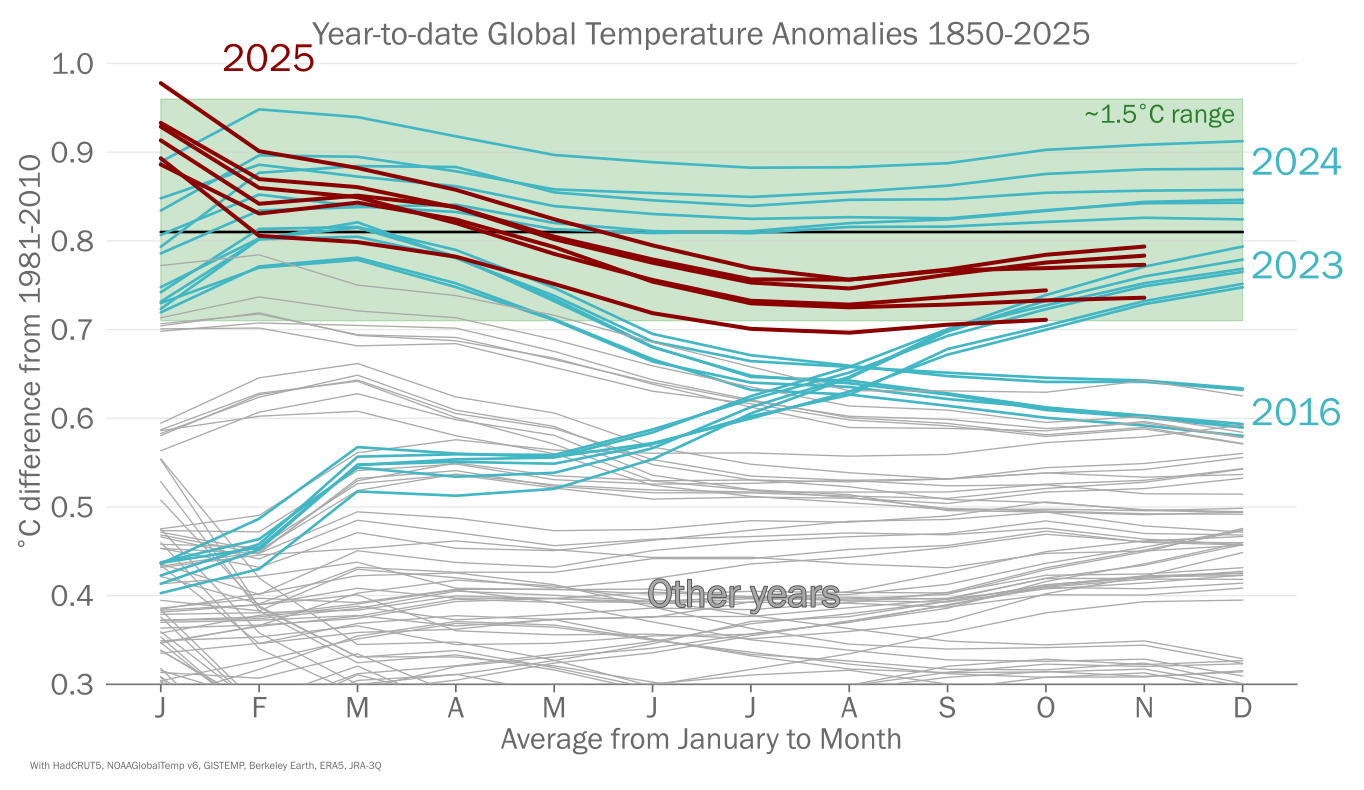
Global temperature average year-to-date
Global mean temperature is based on measurements made at weather stations over land and by ships and buoys over the ocean. Temperatures are typically expressed as anomalies which are temperature differences from the average for a standard period. Here, 1850-1900 is used for the global mean. Instrumental temperature records are some of the longest climate records available, with some series extending back to the 17th century.
The data in the above plot are available in a zip file containing a csv file for each data set.
Data file: Global_temperature_average_year-to-date_data_files.zip
Checksum: 66720010a514ec1907595b10ce321ca5
Format: BADC CSV format
Berkeley Earth
Citation:
To produce the plot, the following processing steps were performed:
- Data set created from file ['Global Temperatures Collab.csv'] downloaded from [] at ['2026-01-12 16:19:43']
- Rebaselined to 1981-2010 for each month separately by calculating the arithmetic mean of the data over the baseline period and subtracting the mean from all data values. This is done for each month separately (Januarys, Februarys etc).
CMST
Citation:
Data citation: Sun Wenbin; Qingxiang, Li (2021): China global Merged surface temperature 2.0 during 1850-2020. figshare. Dataset. https://doi.org/10.6084/m9.figshare.16929427.v4
To produce the plot, the following processing steps were performed:
- Data set created from file ['Global Temperatures Collab.csv'] downloaded from [] at ['2026-01-12 16:19:43']
- Rebaselined to 1981-2010 for each month separately by calculating the arithmetic mean of the data over the baseline period and subtracting the mean from all data values. This is done for each month separately (Januarys, Februarys etc).
DCENT-I
Citations:
- Chan, D., Gebbie, G., Huybers, P. & Kent, E. C. DCENT: Dynamically Consistent ENsemble of Temperature at the Earth Surface. https://doi.org/10.7910/DVN/NU4UGW (2024)..
- Chan, D., Chan, S. C., Siddons, J. T., Cable, A., Cornes, R. C., Kent, E. C., Gebbie, G., & Huybers, P. DCENT-I: A Globally Infilled Extension of the Dynamically Consistent ENsemble of Temperature Dataset. https://doi.org/10.7910/DVN/ZY0WM8 (2025)..
To produce the plot, the following processing steps were performed:
- Data set created from file ['Global Temperatures Collab.csv'] downloaded from [] at ['2026-01-12 16:19:43']
- Rebaselined to 1981-2010 for each month separately by calculating the arithmetic mean of the data over the baseline period and subtracting the mean from all data values. This is done for each month separately (Januarys, Februarys etc).
ERA5
Citation:
Data citation: Hersbach, H., Bell, B., Berrisford, P., Biavati, G., Horányi, A., Muñoz Sabater, J., Nicolas, J., Peubey, C., Radu, R., Rozum, I., Schepers, D., Simmons, A., Soci, C., Dee, D., Thépaut, J-N. (2023): ERA5 monthly averaged data on single levels from 1940 to present. Copernicus Climate Change Service (C3S) Climate Data Store (CDS), DOI: 10.24381/cds.f17050d7 (Accessed on 2026-01-12 16:19:43)
Acknowledgement: Contains using Copernicus Climate Change Service information [2026]. Neither the European Commission nor ECMWF is responsible for any use that may be made of the Copernicus information or data it contains.
To produce the plot, the following processing steps were performed:
- Data set created from file ['Global Temperatures Collab.csv'] downloaded from [] at ['2026-01-12 16:19:43']
- Rebaselined to 1981-2010 for each month separately by calculating the arithmetic mean of the data over the baseline period and subtracting the mean from all data values. This is done for each month separately (Januarys, Februarys etc).
GISTEMP
Citation:
Data citation: GISTEMP Team, 2022: GISS Surface Temperature Analysis (GISTEMP), version 4. NASA Goddard Institute for Space Studies. Dataset accessed 2026-01-12 18:25:53 at data.giss.nasa.gov/gistemp/.
To produce the plot, the following processing steps were performed:
- Data set created from file ['Global Temperatures Collab.csv'] downloaded from [] at ['2026-01-12 18:25:53']
- Rebaselined to 1981-2010 for each month separately by calculating the arithmetic mean of the data over the baseline period and subtracting the mean from all data values. This is done for each month separately (Januarys, Februarys etc).
HadCRUT5
Citation:
Acknowledgement: HadCRUT.5.1.0.0 data were obtained from http://www.metoffice.gov.uk/hadobs/hadcrut5 on 2026-01-12 16:19:43 and are © British Crown Copyright, Met Office 2026, provided under an Open Government License, http://www.nationalarchives.gov.uk/doc/open-government-licence/version/3/
To produce the plot, the following processing steps were performed:
- Data set created from file ['Global Temperatures Collab.csv'] downloaded from [] at ['2026-01-12 16:19:43']
- Rebaselined to 1981-2010 for each month separately by calculating the arithmetic mean of the data over the baseline period and subtracting the mean from all data values. This is done for each month separately (Januarys, Februarys etc).
JRA-3Q
Citation:
Data citation: Japan Meteorological Agency. 2023, updated monthly. Japanese Reanalysis for Three Quarters of a Century (JRA-3Q). Research Data Archive at the National Center for Atmospheric Research, Computational and Information Systems Laboratory. https://doi.org/10.5065/AVTZ-1H78. Accessed 2026-01-12 16:19:43.
To produce the plot, the following processing steps were performed:
- Data set created from file ['Global Temperatures Collab.csv'] downloaded from [] at ['2026-01-12 16:19:43']
- Rebaselined to 1981-2010 for each month separately by calculating the arithmetic mean of the data over the baseline period and subtracting the mean from all data values. This is done for each month separately (Januarys, Februarys etc).
NOAAGlobalTemp v6
Citation:
Data citation: Huang, Boyin; Yin, Xungang; Menne, Matthew J.; Vose, Russell S.; and Zhang, Huai-Min. 2024. NOAA Global Surface Temperature Dataset (NOAAGlobalTemp), Version 6.0.. NOAA National Centers for Environmental Information. https://doi.org/10.25921/rzxg-p717. Accessed 2026-01-12 16:19:43.
To produce the plot, the following processing steps were performed:
- Data set created from file ['Global Temperatures Collab.csv'] downloaded from [] at ['2026-01-12 16:19:43']
- Rebaselined to 1981-2010 for each month separately by calculating the arithmetic mean of the data over the baseline period and subtracting the mean from all data values. This is done for each month separately (Januarys, Februarys etc).
Global temperature year by year comparison
Global mean temperature is based on measurements made at weather stations over land and by ships and buoys over the ocean. Temperatures are typically expressed as anomalies which are temperature differences from the average for a standard period. Here, 1850-1900 is used for the global mean. Instrumental temperature records are some of the longest climate records available, with some series extending back to the 17th century.
The data in the above plot are available in a zip file containing a csv file for each data set.
Data file: Global_temperature_year_by_year_comparison_data_files.zip
Checksum: 9a10e60607e16279fe0c19a35534f588
Format: BADC CSV format
Berkeley Earth
Citation:
To produce the plot, the following processing steps were performed:
- Data set created from file ['Global Temperatures Collab.csv'] downloaded from [] at ['2026-01-12 16:19:43']
- Rebaselined to 1981-2010 for each month separately by calculating the arithmetic mean of the data over the baseline period and subtracting the mean from all data values. This is done for each month separately (Januarys, Februarys etc).
CMST
Citation:
Data citation: Sun Wenbin; Qingxiang, Li (2021): China global Merged surface temperature 2.0 during 1850-2020. figshare. Dataset. https://doi.org/10.6084/m9.figshare.16929427.v4
To produce the plot, the following processing steps were performed:
- Data set created from file ['Global Temperatures Collab.csv'] downloaded from [] at ['2026-01-12 16:19:43']
- Rebaselined to 1981-2010 for each month separately by calculating the arithmetic mean of the data over the baseline period and subtracting the mean from all data values. This is done for each month separately (Januarys, Februarys etc).
DCENT-I
Citations:
- Chan, D., Gebbie, G., Huybers, P. & Kent, E. C. DCENT: Dynamically Consistent ENsemble of Temperature at the Earth Surface. https://doi.org/10.7910/DVN/NU4UGW (2024)..
- Chan, D., Chan, S. C., Siddons, J. T., Cable, A., Cornes, R. C., Kent, E. C., Gebbie, G., & Huybers, P. DCENT-I: A Globally Infilled Extension of the Dynamically Consistent ENsemble of Temperature Dataset. https://doi.org/10.7910/DVN/ZY0WM8 (2025)..
To produce the plot, the following processing steps were performed:
- Data set created from file ['Global Temperatures Collab.csv'] downloaded from [] at ['2026-01-12 16:19:43']
- Rebaselined to 1981-2010 for each month separately by calculating the arithmetic mean of the data over the baseline period and subtracting the mean from all data values. This is done for each month separately (Januarys, Februarys etc).
ERA5
Citation:
Data citation: Hersbach, H., Bell, B., Berrisford, P., Biavati, G., Horányi, A., Muñoz Sabater, J., Nicolas, J., Peubey, C., Radu, R., Rozum, I., Schepers, D., Simmons, A., Soci, C., Dee, D., Thépaut, J-N. (2023): ERA5 monthly averaged data on single levels from 1940 to present. Copernicus Climate Change Service (C3S) Climate Data Store (CDS), DOI: 10.24381/cds.f17050d7 (Accessed on 2026-01-12 16:19:43)
Acknowledgement: Contains using Copernicus Climate Change Service information [2026]. Neither the European Commission nor ECMWF is responsible for any use that may be made of the Copernicus information or data it contains.
To produce the plot, the following processing steps were performed:
- Data set created from file ['Global Temperatures Collab.csv'] downloaded from [] at ['2026-01-12 16:19:43']
- Rebaselined to 1981-2010 for each month separately by calculating the arithmetic mean of the data over the baseline period and subtracting the mean from all data values. This is done for each month separately (Januarys, Februarys etc).
GISTEMP
Citation:
Data citation: GISTEMP Team, 2022: GISS Surface Temperature Analysis (GISTEMP), version 4. NASA Goddard Institute for Space Studies. Dataset accessed 2026-01-12 18:25:53 at data.giss.nasa.gov/gistemp/.
To produce the plot, the following processing steps were performed:
- Data set created from file ['Global Temperatures Collab.csv'] downloaded from [] at ['2026-01-12 18:25:53']
- Rebaselined to 1981-2010 for each month separately by calculating the arithmetic mean of the data over the baseline period and subtracting the mean from all data values. This is done for each month separately (Januarys, Februarys etc).
HadCRUT5
Citation:
Acknowledgement: HadCRUT.5.1.0.0 data were obtained from http://www.metoffice.gov.uk/hadobs/hadcrut5 on 2026-01-12 16:19:43 and are © British Crown Copyright, Met Office 2026, provided under an Open Government License, http://www.nationalarchives.gov.uk/doc/open-government-licence/version/3/
To produce the plot, the following processing steps were performed:
- Data set created from file ['Global Temperatures Collab.csv'] downloaded from [] at ['2026-01-12 16:19:43']
- Rebaselined to 1981-2010 for each month separately by calculating the arithmetic mean of the data over the baseline period and subtracting the mean from all data values. This is done for each month separately (Januarys, Februarys etc).
JRA-3Q
Citation:
Data citation: Japan Meteorological Agency. 2023, updated monthly. Japanese Reanalysis for Three Quarters of a Century (JRA-3Q). Research Data Archive at the National Center for Atmospheric Research, Computational and Information Systems Laboratory. https://doi.org/10.5065/AVTZ-1H78. Accessed 2026-01-12 16:19:43.
To produce the plot, the following processing steps were performed:
- Data set created from file ['Global Temperatures Collab.csv'] downloaded from [] at ['2026-01-12 16:19:43']
- Rebaselined to 1981-2010 for each month separately by calculating the arithmetic mean of the data over the baseline period and subtracting the mean from all data values. This is done for each month separately (Januarys, Februarys etc).
NOAAGlobalTemp v6
Citation:
Data citation: Huang, Boyin; Yin, Xungang; Menne, Matthew J.; Vose, Russell S.; and Zhang, Huai-Min. 2024. NOAA Global Surface Temperature Dataset (NOAAGlobalTemp), Version 6.0.. NOAA National Centers for Environmental Information. https://doi.org/10.25921/rzxg-p717. Accessed 2026-01-12 16:19:43.
To produce the plot, the following processing steps were performed:
- Data set created from file ['Global Temperatures Collab.csv'] downloaded from [] at ['2026-01-12 16:19:43']
- Rebaselined to 1981-2010 for each month separately by calculating the arithmetic mean of the data over the baseline period and subtracting the mean from all data values. This is done for each month separately (Januarys, Februarys etc).
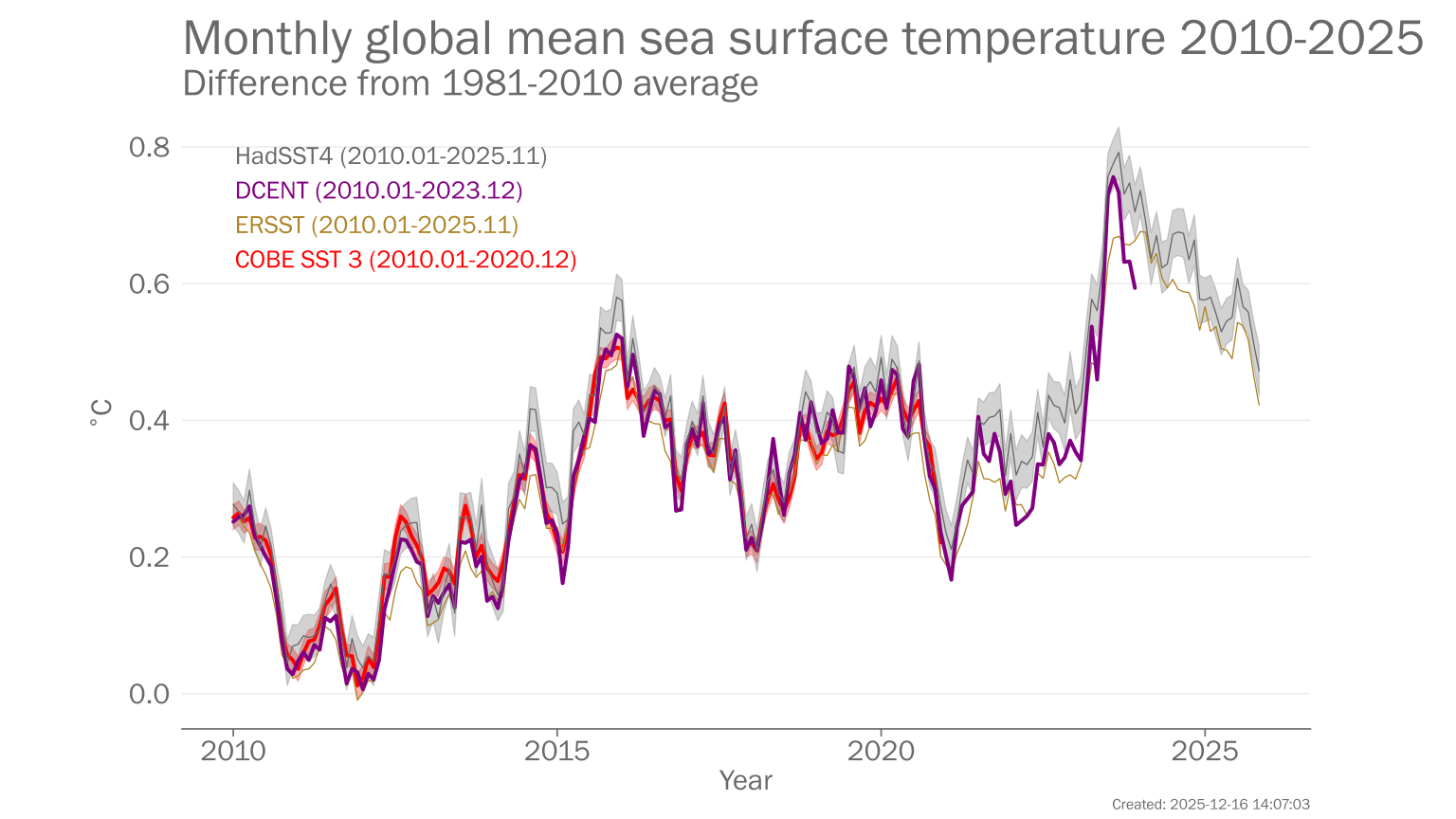
Monthly global sea-surface temperature
Sea-surface temperature (SST) is the temperature of the surface ocean, typically measured in the upper metre, or metres of the ocean, by ships, buoys and satellites.
The data in the above plot are available in a zip file containing a csv file for each data set.
Data file: Monthly_global_sea-surface_temperature_data_files.zip
Checksum: d469fbefd71c8e6082e7cfdcbbf57f85
Format: BADC CSV format
COBE SST 3
Original data file (external link)
Citation:
To produce the plot, the following processing steps were performed:
- Data set created from file ['gm_cobe-sst3'] downloaded from ['https://climate.mri-jma.go.jp/pub/archives/Ishii-et-al_COBE-SST3/gm/gm_cobe-sst3'] at ['2025-06-20 17:02:42']
- Rebaselined to 1981-2010 for each month separately by calculating the arithmetic mean of the data over the baseline period and subtracting the mean from all data values. This is done for each month separately (Januarys, Februarys etc).
- Selected years within the range 2010 to 2025.
DCENT
Original data file (external link)
Citation:
Data citation: Chan, Duo; Gebbie, Geoffrey; Huybers, Peter; Kent, Elizabeth, 2024, DCENT: Dynamically Consistent ENsemble of Temperature at the earth surface, https://doi.org/10.7910/DVN/NU4UGW, Harvard Dataverse, V1
To produce the plot, the following processing steps were performed:
- Gridded dataset created from file ['DCENT_ensemble_1850_2023_ensemble_mean.nc', 'DCENT_monthly_climatology_1982_2014.nc'] downloaded from ['']
- Data set created from file ['DCENT_ensemble_1850_2023_ensemble_mean.nc', 'DCENT_monthly_climatology_1982_2014.nc'] downloaded from [''] at ['2024-07-31 11:55:51', '2024-07-31 11:55:49']
- Rebaselined to 1981-2010 for each month separately by calculating the arithmetic mean of the data over the baseline period and subtracting the mean from all data values. This is done for each month separately (Januarys, Februarys etc).
- Selected years within the range 2010 to 2025.
ERSST
Original data file (external link) Original data file (external link)
Citation:
Data citation: Boyin Huang, Peter W. Thorne, Viva F. Banzon, Tim Boyer, Gennady Chepurin, Jay H. Lawrimore, Matthew J. Menne, Thomas M. Smith, Russell S. Vose, and Huai-Min Zhang (2017): NOAA Extended Reconstructed Sea Surface Temperature (ERSST), Version 5. [indicate subset used]. NOAA National Centers for Environmental Information. doi:10.7289/V5T72FNM [2026-01-14 14:45:13].
To produce the plot, the following processing steps were performed:
- Data set created from file ['aravg.mon.ocean.90S.90N.v6.0.0.2026MMMM.asc', 'aravg.ann.ocean.90S.90N.v6.0.0.2026MMMM.asc'] downloaded from ['https://www.ncei.noaa.gov/data/noaa-global-surface-temperature/v6/access/timeseries/aravg.mon.ocean.90S.90N.v6.0.0.2026MMMM.asc', 'https://www.ncei.noaa.gov/data/noaa-global-surface-temperature/v6/access/timeseries/aravg.ann.ocean.90S.90N.v6.0.0.2026MMMM.asc'] at ['2026-01-14 14:45:13']
- Rebaselined to 1981-2010 for each month separately by calculating the arithmetic mean of the data over the baseline period and subtracting the mean from all data values. This is done for each month separately (Januarys, Februarys etc).
- Selected years within the range 2010 to 2025.
HadSST4
Original data file (external link) Original data file (external link)
Citation:
Acknowledgement: HadSST.4.2.0.0 data were obtained from http://www.metoffice.gov.uk/hadobs/hadsst4 on 2026-01-05 11:06:42 and are © British Crown Copyright, Met Office 2026, provided under an Open Government License, http://www.nationalarchives.gov.uk/doc/open-government-licence/version/3/
To produce the plot, the following processing steps were performed:
- Data set created from file ['HadSST.4.2.0.0_monthly_GLOBE.csv', 'HadSST.4.2.0.0_annual_GLOBE.csv'] downloaded from ['https://www.metoffice.gov.uk/hadobs/hadsst4/data/data/HadSST.4.2.0.0_monthly_GLOBE.csv', 'https://www.metoffice.gov.uk/hadobs/hadsst4/data/data/HadSST.4.2.0.0_annual_GLOBE.csv'] at ['2026-01-05 11:06:42', '2026-01-05 11:06:43']
- Rebaselined to 1981-2010 for each month separately by calculating the arithmetic mean of the data over the baseline period and subtracting the mean from all data values. This is done for each month separately (Januarys, Februarys etc).
- Selected years within the range 2010 to 2025.
Temperature Anomalies
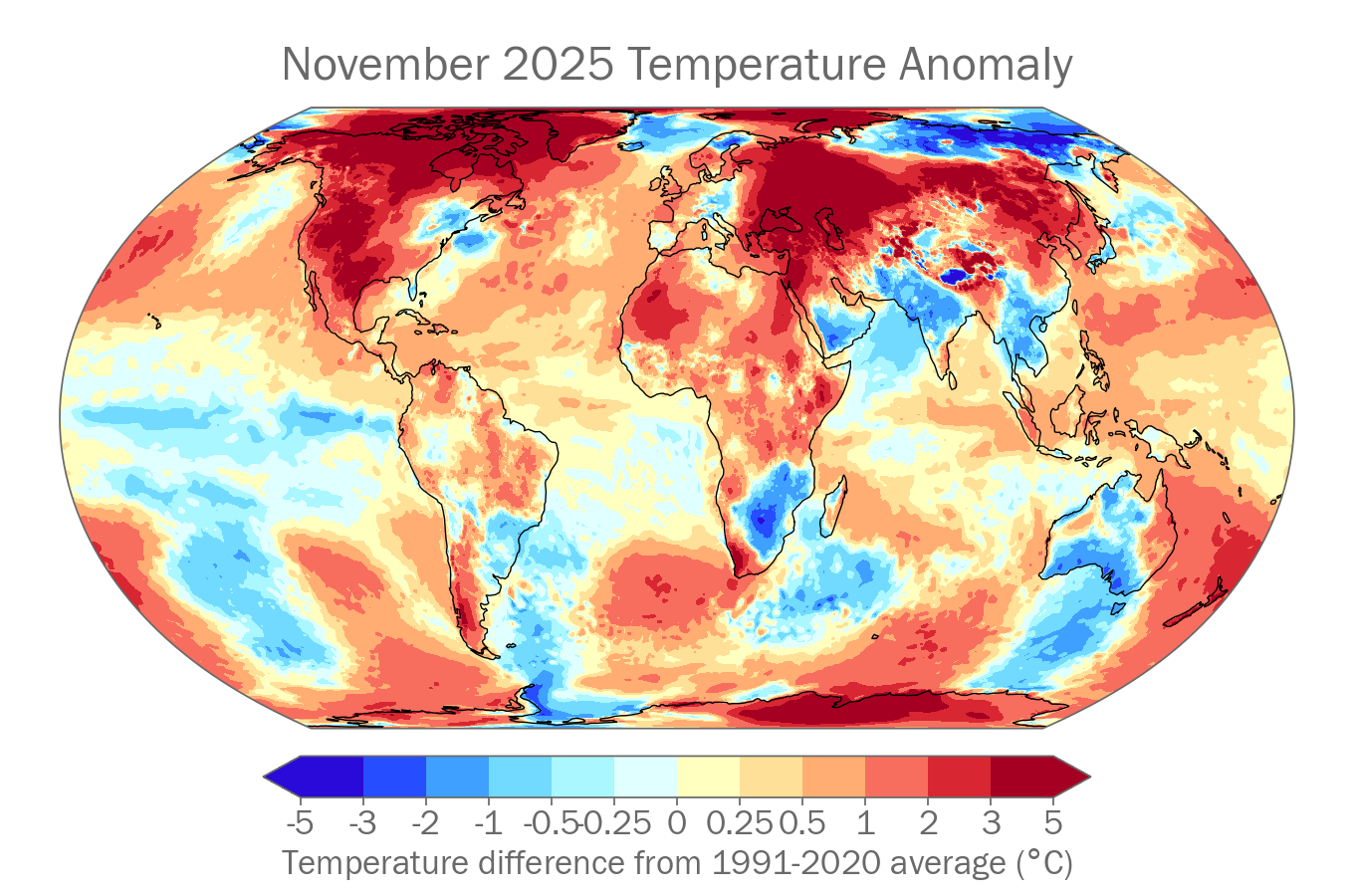
Global mean temperature is based on measurements made at weather stations over land and by ships and buoys over the ocean. Temperatures are typically expressed as anomalies which are temperature differences from the average for a standard period. Here, 1850-1900 is used for the global mean. Instrumental temperature records are some of the longest climate records available, with some series extending back to the 17th century.
The data in the above plot are available in a zip file containing a csv file for each data set.
Data file: Temperature_Anomalies_data_files.zip
Checksum: 76cdb2bad9582d23c1f6f4d868218d6c
Format: BADC CSV format
ERA5
Original data file (external link)
Citation:
Data citation: Hersbach, H., Bell, B., Berrisford, P., Biavati, G., Horányi, A., Muñoz Sabater, J., Nicolas, J., Peubey, C., Radu, R., Rozum, I., Schepers, D., Simmons, A., Soci, C., Dee, D., Thépaut, J-N. (2023): ERA5 monthly averaged data on single levels from 1940 to present. Copernicus Climate Change Service (C3S) Climate Data Store (CDS), DOI: 10.24381/cds.f17050d7 (Accessed on AAAA)
Acknowledgement: Contains using Copernicus Climate Change Service information [YYYY]. Neither the European Commission nor ECMWF is responsible for any use that may be made of the Copernicus information or data it contains.
To produce the plot, the following processing steps were performed:
- Gridded dataset created from file ['era5_2m_tas_YYYY.nc'] downloaded from ['']
- Rebaselined to 1991-2020
- Selected single month 12/2025
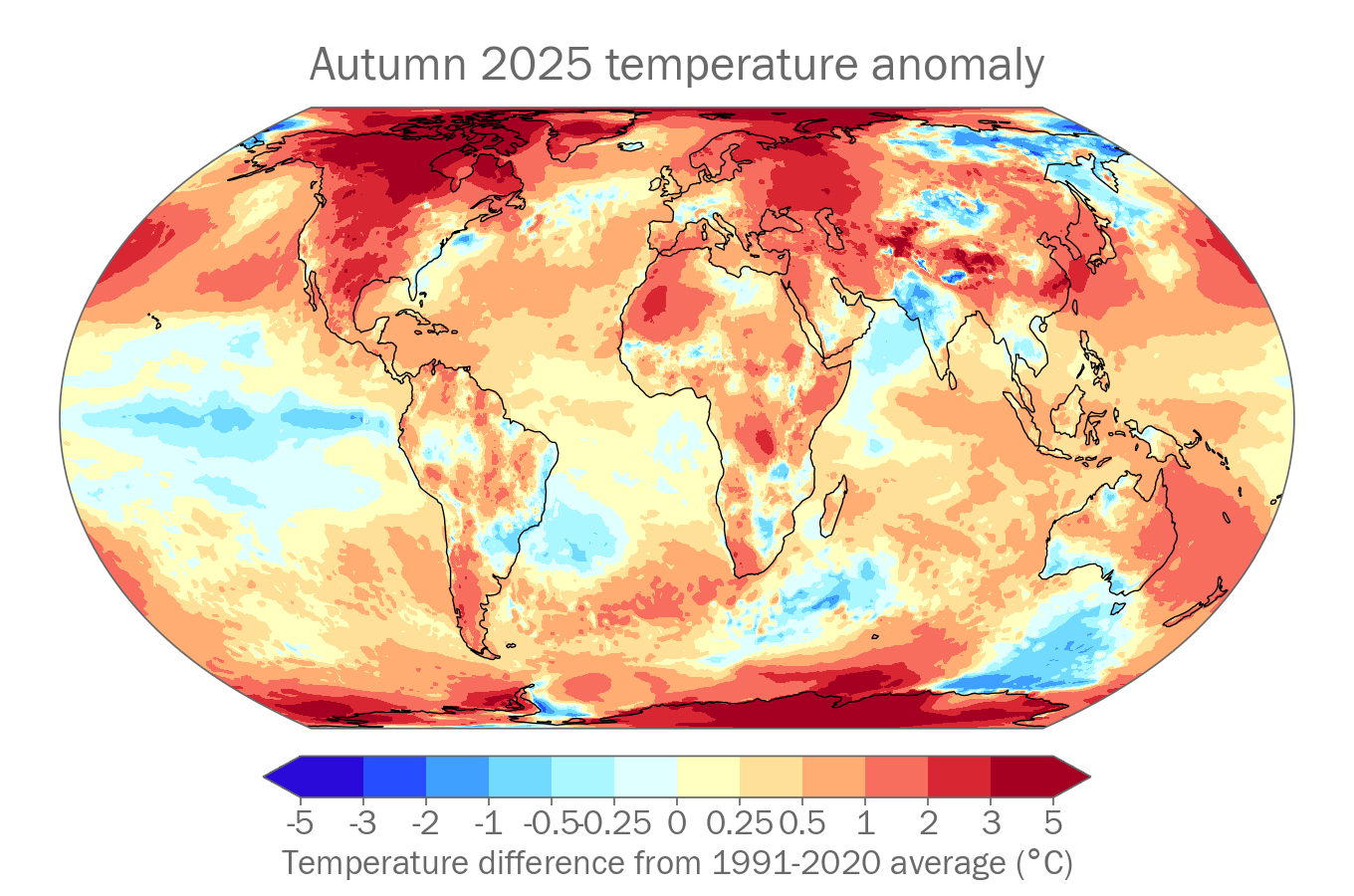
Seasonal Temperature Anomalies
Global mean temperature is based on measurements made at weather stations over land and by ships and buoys over the ocean. Temperatures are typically expressed as anomalies which are temperature differences from the average for a standard period. Here, 1850-1900 is used for the global mean. Instrumental temperature records are some of the longest climate records available, with some series extending back to the 17th century.
The data in the above plot are available in a zip file containing a csv file for each data set.
Data file: Seasonal_Temperature_Anomalies_data_files.zip
Checksum: 76cdb2bad9582d23c1f6f4d868218d6c
Format: BADC CSV format
ERA5
Original data file (external link)
Citation:
Data citation: Hersbach, H., Bell, B., Berrisford, P., Biavati, G., Horányi, A., Muñoz Sabater, J., Nicolas, J., Peubey, C., Radu, R., Rozum, I., Schepers, D., Simmons, A., Soci, C., Dee, D., Thépaut, J-N. (2023): ERA5 monthly averaged data on single levels from 1940 to present. Copernicus Climate Change Service (C3S) Climate Data Store (CDS), DOI: 10.24381/cds.f17050d7 (Accessed on AAAA)
Acknowledgement: Contains using Copernicus Climate Change Service information [YYYY]. Neither the European Commission nor ECMWF is responsible for any use that may be made of the Copernicus information or data it contains.
To produce the plot, the following processing steps were performed:
- Gridded dataset created from file ['era5_2m_tas_YYYY.nc'] downloaded from ['']
- Rebaselined to 1991-2020
- Selected period from 09/2025 to 11/2025
- Calculated time mean
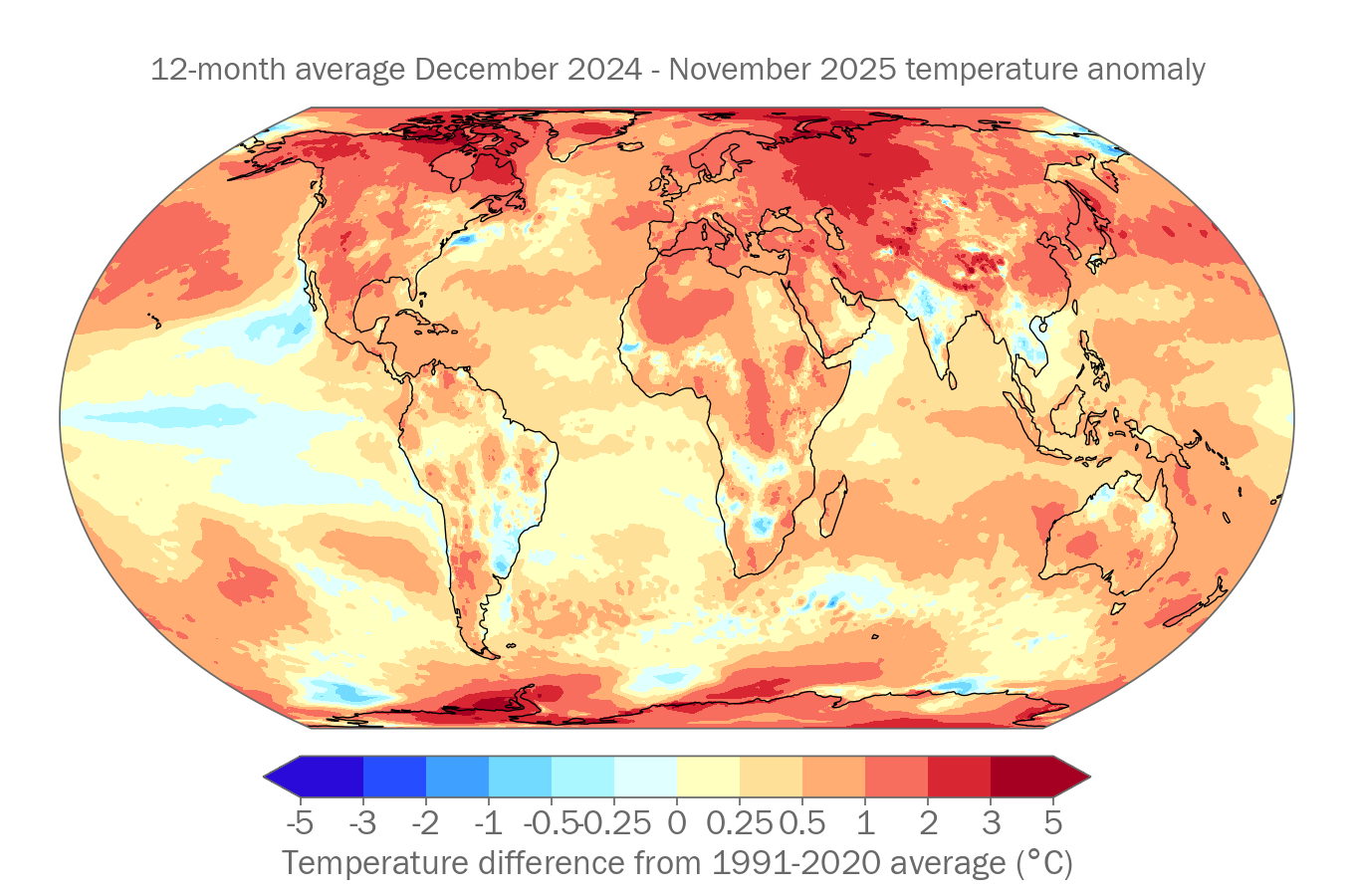
Annual Temperature Anomalies
Global mean temperature is based on measurements made at weather stations over land and by ships and buoys over the ocean. Temperatures are typically expressed as anomalies which are temperature differences from the average for a standard period. Here, 1850-1900 is used for the global mean. Instrumental temperature records are some of the longest climate records available, with some series extending back to the 17th century.
The data in the above plot are available in a zip file containing a csv file for each data set.
Data file: Annual_Temperature_Anomalies_data_files.zip
Checksum: 76cdb2bad9582d23c1f6f4d868218d6c
Format: BADC CSV format
ERA5
Original data file (external link)
Citation:
Data citation: Hersbach, H., Bell, B., Berrisford, P., Biavati, G., Horányi, A., Muñoz Sabater, J., Nicolas, J., Peubey, C., Radu, R., Rozum, I., Schepers, D., Simmons, A., Soci, C., Dee, D., Thépaut, J-N. (2023): ERA5 monthly averaged data on single levels from 1940 to present. Copernicus Climate Change Service (C3S) Climate Data Store (CDS), DOI: 10.24381/cds.f17050d7 (Accessed on AAAA)
Acknowledgement: Contains using Copernicus Climate Change Service information [YYYY]. Neither the European Commission nor ECMWF is responsible for any use that may be made of the Copernicus information or data it contains.
To produce the plot, the following processing steps were performed:
- Gridded dataset created from file ['era5_2m_tas_YYYY.nc'] downloaded from ['']
- Rebaselined to 1991-2020
- Selected period from 01/2025 to 12/2025
- Calculated time mean
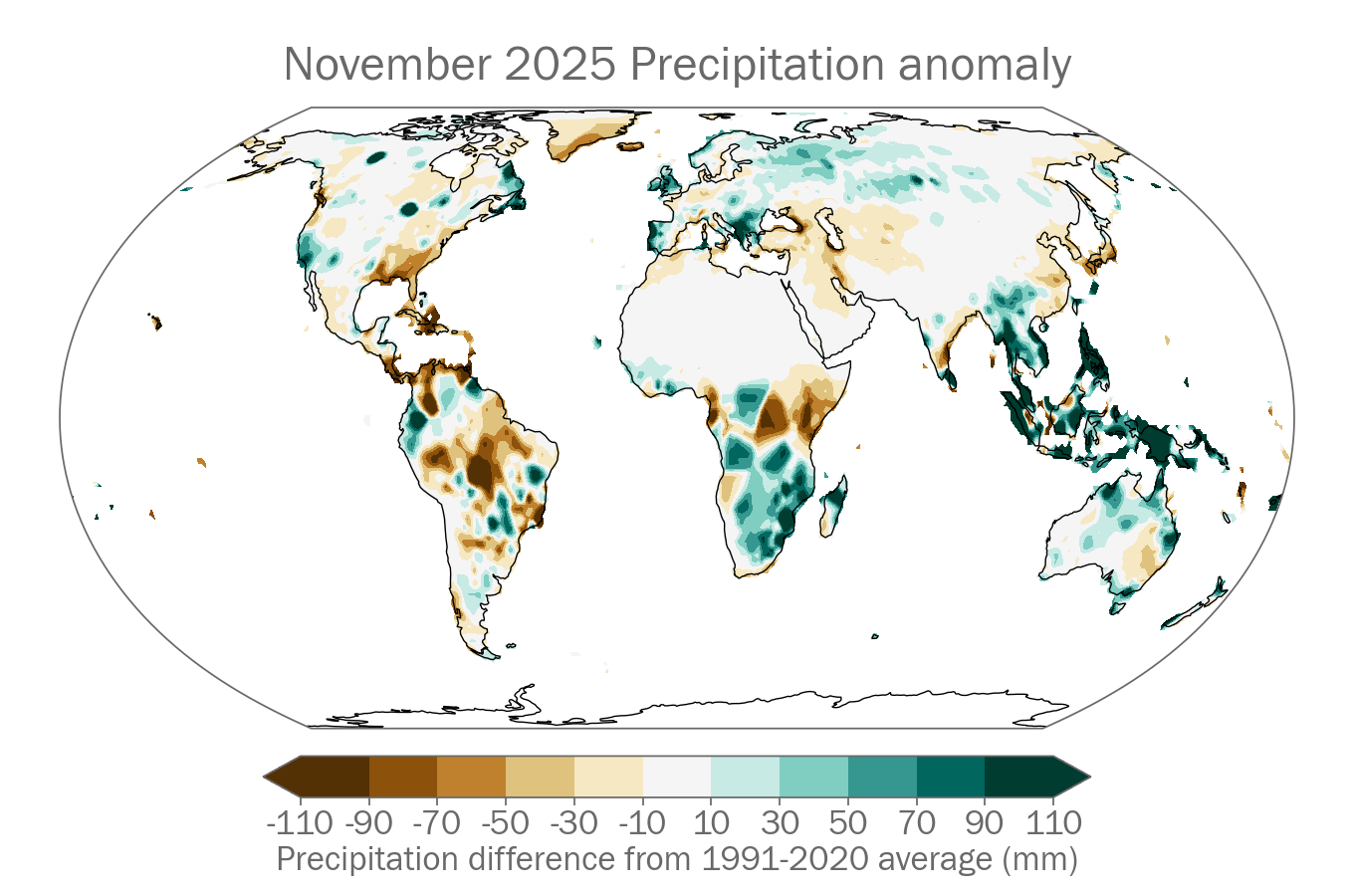
Precipitation
The data in the above plot are available in a zip file containing a csv file for each data set.
Data file: Precipitation_data_files.zip
Checksum: 76cdb2bad9582d23c1f6f4d868218d6c
Format: BADC CSV format
GPCC
Original data file (external link) Original data file (external link) Original data file (external link) Original data file (external link)
To produce the plot, the following processing steps were performed:
- Gridded dataset created from file ['monitoring_v2022_10_YYYY_MMMM.nc.gz', 'first_guess_monthly_YYYY_MMMM.nc.gz', 'normals_1981_2010_v2022_10.nc.gz', 'normals_1991_2020_v2022_10.nc.gz'] downloaded from ['https://opendata.dwd.de/climate_environment/GPCC/monitoring_v2022/YYYY/monitoring_v2022_10_YYYY_MMMM.nc.gz', 'https://opendata.dwd.de/climate_environment/GPCC/first_guess/YYYY/first_guess_monthly_YYYY_MMMM.nc.gz', 'https://opendata.dwd.de/climate_environment/GPCC/gpcc_normals_v2022/normals_1981_2010_v2022_10.nc.gz', 'https://opendata.dwd.de/climate_environment/GPCC/gpcc_normals_v2022/normals_1991_2020_v2022_10.nc.gz']
- Rebaselined to 1991-2020
- Selected single month 12/2025
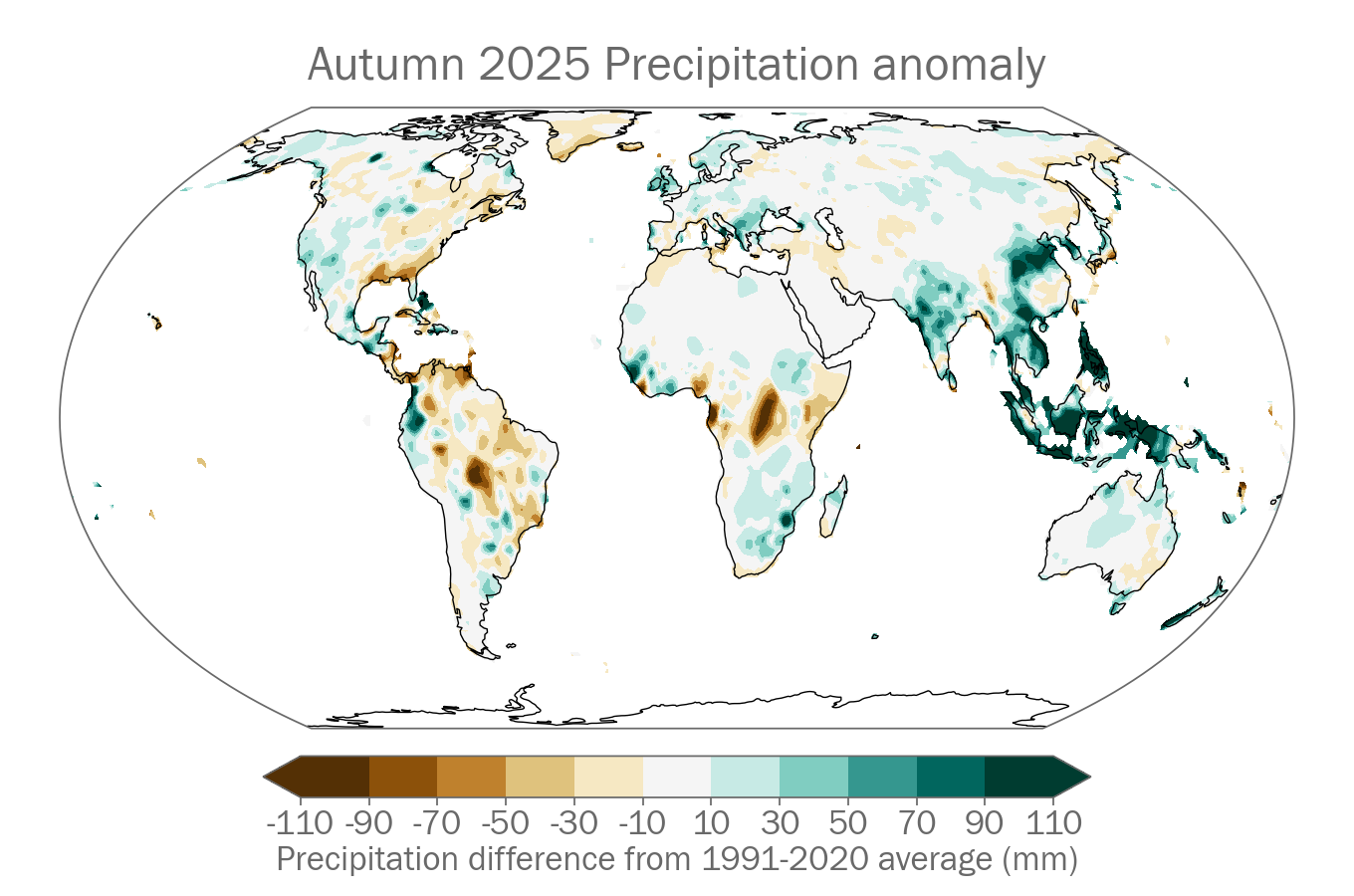
Seasonal precipitation anomalies
The data in the above plot are available in a zip file containing a csv file for each data set.
Data file: Seasonal_precipitation_anomalies_data_files.zip
Checksum: 76cdb2bad9582d23c1f6f4d868218d6c
Format: BADC CSV format
GPCC
Original data file (external link) Original data file (external link) Original data file (external link) Original data file (external link)
To produce the plot, the following processing steps were performed:
- Gridded dataset created from file ['monitoring_v2022_10_YYYY_MMMM.nc.gz', 'first_guess_monthly_YYYY_MMMM.nc.gz', 'normals_1981_2010_v2022_10.nc.gz', 'normals_1991_2020_v2022_10.nc.gz'] downloaded from ['https://opendata.dwd.de/climate_environment/GPCC/monitoring_v2022/YYYY/monitoring_v2022_10_YYYY_MMMM.nc.gz', 'https://opendata.dwd.de/climate_environment/GPCC/first_guess/YYYY/first_guess_monthly_YYYY_MMMM.nc.gz', 'https://opendata.dwd.de/climate_environment/GPCC/gpcc_normals_v2022/normals_1981_2010_v2022_10.nc.gz', 'https://opendata.dwd.de/climate_environment/GPCC/gpcc_normals_v2022/normals_1991_2020_v2022_10.nc.gz']
- Rebaselined to 1991-2020
- Selected period from 09/2025 to 11/2025
- Calculated time mean
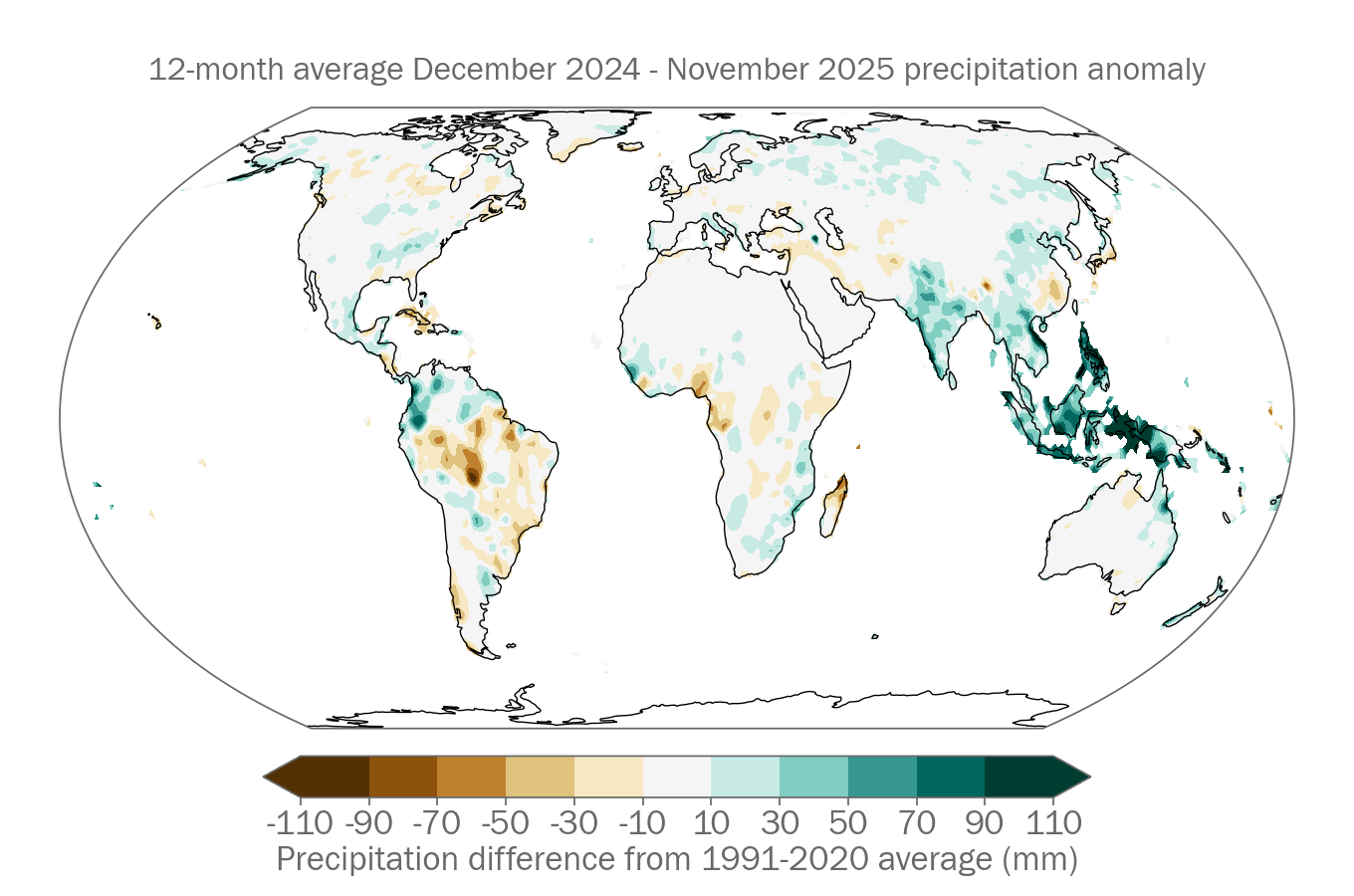
Annual precipitation anomalies
The data in the above plot are available in a zip file containing a csv file for each data set.
Data file: Annual_precipitation_anomalies_data_files.zip
Checksum: 76cdb2bad9582d23c1f6f4d868218d6c
Format: BADC CSV format
GPCC
Original data file (external link) Original data file (external link) Original data file (external link) Original data file (external link)
To produce the plot, the following processing steps were performed:
- Gridded dataset created from file ['monitoring_v2022_10_YYYY_MMMM.nc.gz', 'first_guess_monthly_YYYY_MMMM.nc.gz', 'normals_1981_2010_v2022_10.nc.gz', 'normals_1991_2020_v2022_10.nc.gz'] downloaded from ['https://opendata.dwd.de/climate_environment/GPCC/monitoring_v2022/YYYY/monitoring_v2022_10_YYYY_MMMM.nc.gz', 'https://opendata.dwd.de/climate_environment/GPCC/first_guess/YYYY/first_guess_monthly_YYYY_MMMM.nc.gz', 'https://opendata.dwd.de/climate_environment/GPCC/gpcc_normals_v2022/normals_1981_2010_v2022_10.nc.gz', 'https://opendata.dwd.de/climate_environment/GPCC/gpcc_normals_v2022/normals_1991_2020_v2022_10.nc.gz']
- Rebaselined to 1991-2020
- Selected period from 01/2025 to 12/2025
- Calculated time mean
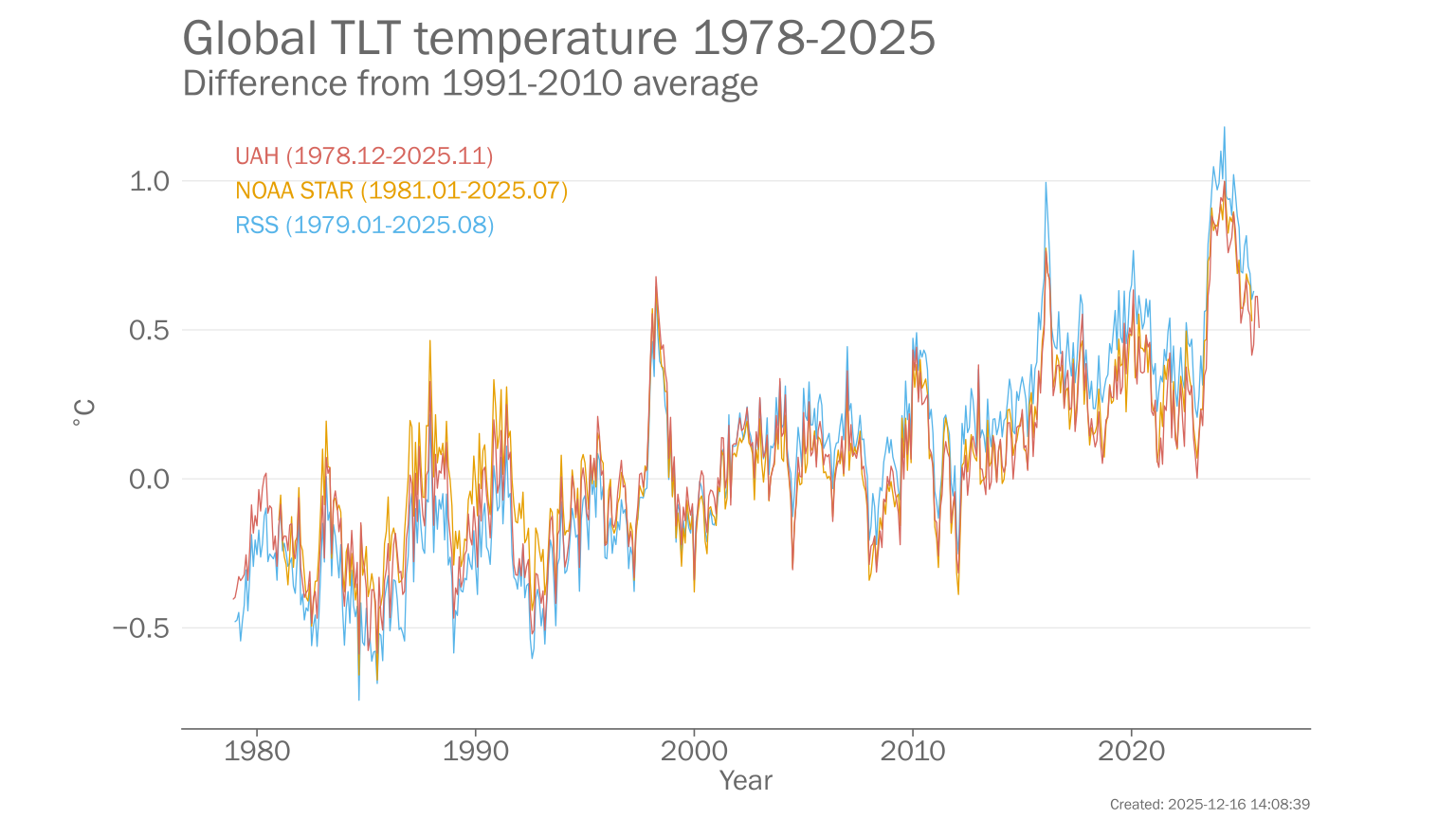
Lower Troposhere Temperature
The data in the above plot are available in a zip file containing a csv file for each data set.
Data file: Lower_Troposhere_Temperature_data_files.zip
Checksum: 22f439df804cafaa12ffd09acefcac0a
Format: BADC CSV format
RSS
Original data file (external link)
Citation:
To produce the plot, the following processing steps were performed:
- Data set created from file ['RSS_Monthly_MSU_AMSU_Channel_TLT_Anomalies_Land_and_Ocean_v04_0.txt'] downloaded from ['http://data.remss.com/msu/monthly_time_series/RSS_Monthly_MSU_AMSU_Channel_TLT_Anomalies_Land_and_Ocean_v04_0.txt'] at ['2026-01-14 14:46:41']
- Rebaselined to 1991-2010 for each month separately by calculating the arithmetic mean of the data over the baseline period and subtracting the mean from all data values. This is done for each month separately (Januarys, Februarys etc).
NOAA STAR
Original data file (external link)
To produce the plot, the following processing steps were performed:
- Data set created from file ['NESDIS-STAR_TCDR_TLT_Combined_With_TMT_TUT_TLS_Monthly_S198101-E202507_V5.0_Regional_Means_Anomaly.txt'] downloaded from ['https://www.star.nesdis.noaa.gov/data/mscat/MSU_AMSU_v5.0/Monthly_Atmospheric_Layer_Mean_Temperature/Global_Mean_Anomaly_Time_Series/NESDIS-STAR_TCDR_TLT_Combined_With_TMT_TUT_TLS_Monthly_S198101-E202507_V5.0_Regional_Means_Anomaly.txt'] at ['2025-10-14 10:47:52']
- Rebaselined to 1991-2010 for each month separately by calculating the arithmetic mean of the data over the baseline period and subtracting the mean from all data values. This is done for each month separately (Januarys, Februarys etc).
UAH
Original data file (external link)
Citation:
To produce the plot, the following processing steps were performed:
- Data set created from file ['uahncdc_lt_6.1.txt'] downloaded from ['https://www.nsstc.uah.edu/data/msu/v6.1/tlt/uahncdc_lt_6.1.txt'] at ['2026-01-14 14:46:43']
- Rebaselined to 1991-2010 for each month separately by calculating the arithmetic mean of the data over the baseline period and subtracting the mean from all data values. This is done for each month separately (Januarys, Februarys etc).
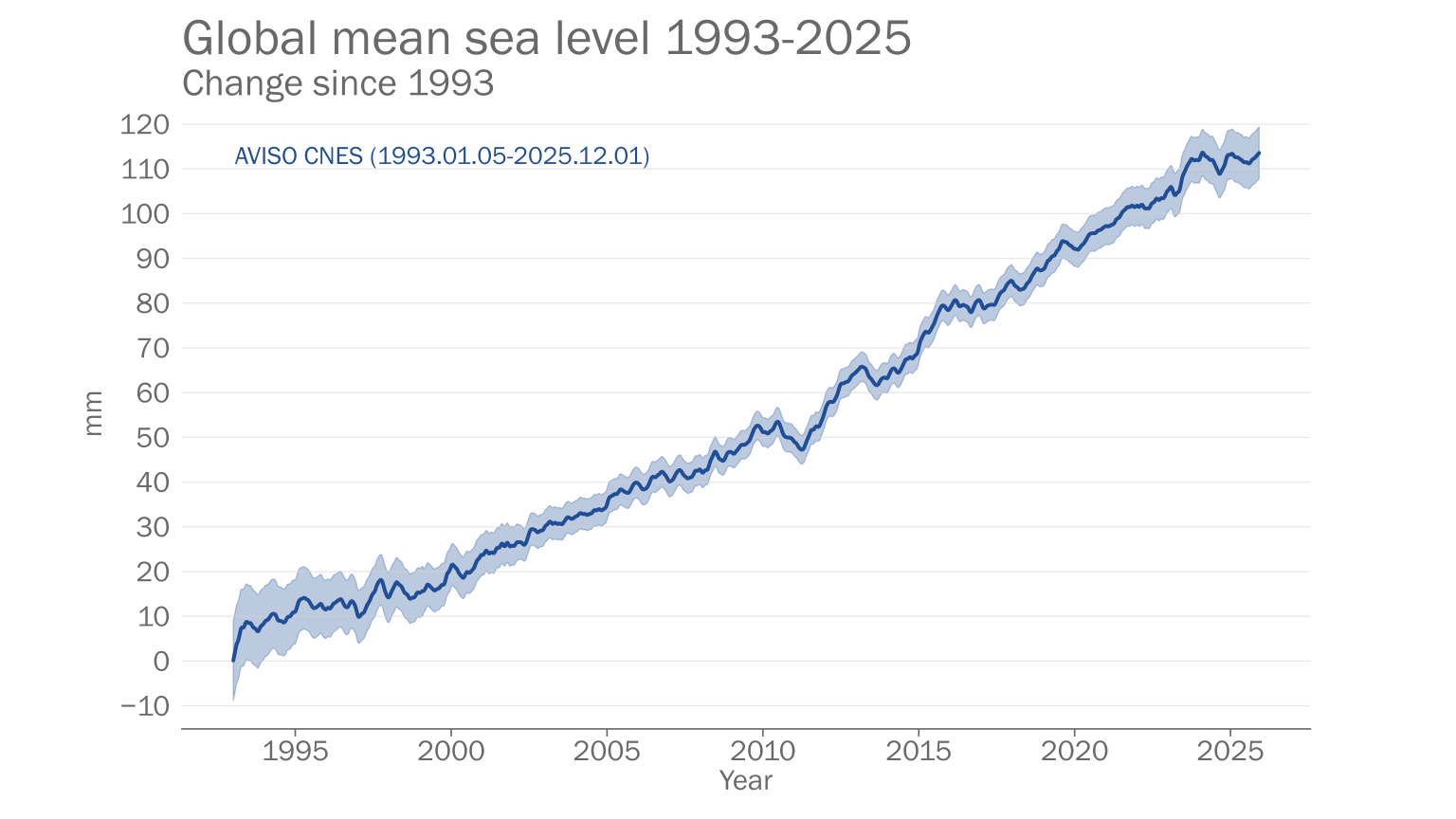
Sea level
Global mean sea level is a measured by satellites using radar altimeters that record the time taken for a radar signal to reach the sea-surface and return to the satellite. Longer records of sea level (not shown here) exist based on tide gauge measurements made along coastlines around the world since the late 19th century.
The data in the above plot are available in a zip file containing a csv file for each data set.
Data file: Sea_level_data_files.zip
Checksum: 76c8bed7af139a39c7287f0d74c4b407
Format: BADC CSV format
AVISO CNES
Original data file (external link)
Citation:
Acknowledgement: Generated using AVISO+ Products
To produce the plot, the following processing steps were performed:
- Data set created from file ['MSL_Serie_MERGED_Global_AVISO_GIA_Adjust_Filter2m_NRT.nc'] downloaded from ['ftp://ftp.aviso.altimetry.fr/pub/oceano/AVISO/indicators/msl/MSL_Serie_MERGED_Global_AVISO_GIA_Adjust_Filter2m_NRT.nc'] at ['2026-01-14 14:45:58']
- Selected years within the range 1993 to 2025.
Arctic sea ice
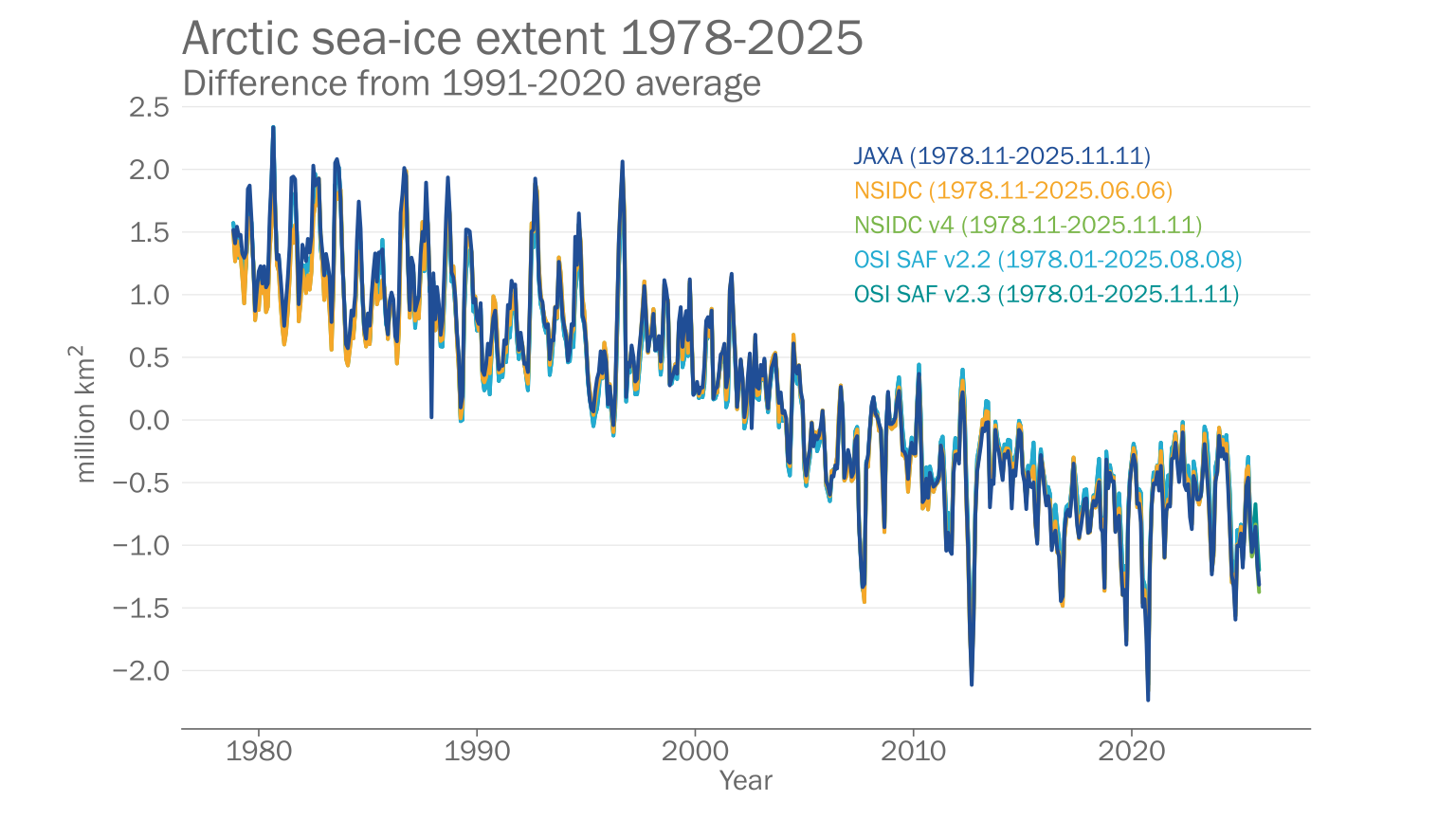
Sea-ice concentrations are estimated from microwave radiances measured from satellites (from 1979). Sea-ice extent is calculated as the area of ocean grid cells where the sea-ice concentration exceeds 15%. Although there are relatively large differences in the absolute extent between data sets, they agree well on the year-to-year changes and the trends.
The data in the above plot are available in a zip file containing a csv file for each data set.
Data file: Arctic_sea_ice_data_files.zip
Checksum: 2de857143d9d517fb39538e2fb85f19c
Format: BADC CSV format
JAXA
Original data file (external link)
To produce the plot, the following processing steps were performed:
- Data set created from file ['JASMES_CLIMATE_SIE_5DAVG_PS_NHM.txt'] downloaded from ['ftp://apollo.eorc.jaxa.jp/pub/JASMES/Polar_XXkm/sie/'] at ['2026-01-05 11:06:50']
- Calculated monthly average from values using arithmetic mean of all dates that fall within each month
- Rebaselined to 1991-2020 for each month separately by calculating the arithmetic mean of the data over the baseline period and subtracting the mean from all data values. This is done for each month separately (Januarys, Februarys etc).
NSIDC v4
Original data file (external link) Original data file (external link) Original data file (external link) Original data file (external link) Original data file (external link) Original data file (external link) Original data file (external link) Original data file (external link) Original data file (external link) Original data file (external link) Original data file (external link) Original data file (external link)
Data citation: Fetterer, F., K. Knowles, W. N. Meier, M. Savoie, and A. K. Windnagel. 2017, updated daily. Sea Ice Index, Version 3. 1979-present. Boulder, Colorado USA. NSIDC: National Snow and Ice Data Center. doi: https://doi.org/10.7265/N5K072F8. [2026-01-14 14:46:04].
Acknowledgement: Fetterer, F., K. Knowles, W. N. Meier, M. Savoie, and A. K. Windnagel. 2017, updated daily. Sea Ice Index, Version 3. 1979-present. Boulder, Colorado USA. NSIDC: National Snow and Ice Data Center. doi: https://doi.org/10.7265/N5K072F8. [2026-01-14 14:46:04].
To produce the plot, the following processing steps were performed:
- Data set created from file ['N_01_extent_v4.0.csv', 'N_02_extent_v4.0.csv', 'N_03_extent_v4.0.csv', 'N_04_extent_v4.0.csv', 'N_05_extent_v4.0.csv', 'N_06_extent_v4.0.csv', 'N_07_extent_v4.0.csv', 'N_08_extent_v4.0.csv', 'N_09_extent_v4.0.csv', 'N_10_extent_v4.0.csv', 'N_11_extent_v4.0.csv', 'N_12_extent_v4.0.csv'] downloaded from ['ftp://sidads.colorado.edu/DATASETS/NOAA/G02135/north/monthly/data/N_01_extent_v4.0.csv', 'ftp://sidads.colorado.edu/DATASETS/NOAA/G02135/north/monthly/data/N_02_extent_v4.0.csv', 'ftp://sidads.colorado.edu/DATASETS/NOAA/G02135/north/monthly/data/N_03_extent_v4.0.csv', 'ftp://sidads.colorado.edu/DATASETS/NOAA/G02135/north/monthly/data/N_04_extent_v4.0.csv', 'ftp://sidads.colorado.edu/DATASETS/NOAA/G02135/north/monthly/data/N_05_extent_v4.0.csv', 'ftp://sidads.colorado.edu/DATASETS/NOAA/G02135/north/monthly/data/N_06_extent_v4.0.csv', 'ftp://sidads.colorado.edu/DATASETS/NOAA/G02135/north/monthly/data/N_07_extent_v4.0.csv', 'ftp://sidads.colorado.edu/DATASETS/NOAA/G02135/north/monthly/data/N_08_extent_v4.0.csv', 'ftp://sidads.colorado.edu/DATASETS/NOAA/G02135/north/monthly/data/N_09_extent_v4.0.csv', 'ftp://sidads.colorado.edu/DATASETS/NOAA/G02135/north/monthly/data/N_10_extent_v4.0.csv', 'ftp://sidads.colorado.edu/DATASETS/NOAA/G02135/north/monthly/data/N_11_extent_v4.0.csv', 'ftp://sidads.colorado.edu/DATASETS/NOAA/G02135/north/monthly/data/N_12_extent_v4.0.csv'] at ['2026-01-14 14:46:04', '2026-01-14 14:46:05', '2026-01-14 14:46:06', '2026-01-14 14:46:07', '2026-01-14 14:46:08', '2026-01-14 14:46:09', '2026-01-14 14:46:10', '2026-01-14 14:46:11', '2026-01-14 14:46:12', '2026-01-14 14:46:13', '2026-01-14 14:46:14', '2026-01-14 14:46:15']
- Rebaselined to 1991-2020 for each month separately by calculating the arithmetic mean of the data over the baseline period and subtracting the mean from all data values. This is done for each month separately (Januarys, Februarys etc).
OSI SAF v2.3
Original data file (external link)
Citation:
Data citation: EUMETSAT Ocean and Sea Ice Satellite Application Facility, Sea ice index 1979-onwards (v2.2, 2023), OSI-420, Data extracted from OSI SAF FTP server: 1979-present, Northern Hemisphere, accessed 2026-01-14 14:46:16
Acknowledgement: The OSI SAF Sea Ice Index v2.2 is made available at https://osisaf-hl.met.no/v2p2-sea-ice-index. The OSI SAF Sea Ice Index v2p1 is prepared using EUMETSAT OSI SAF Sea Ice Concentration data, with R&D input from the ESA Climate Change Initiative (ESA CCI) (Lavergne et al. 2019)
To produce the plot, the following processing steps were performed:
- Data set created from file ['osisaf_nh_sie_monthly.txt'] downloaded from ['ftp://osisaf.met.no/prod_test/ice/index/v2p3/nh/osisaf_nh_sie_monthly.txt'] at ['2026-01-14 14:46:16']
- Rebaselined to 1991-2020 for each month separately by calculating the arithmetic mean of the data over the baseline period and subtracting the mean from all data values. This is done for each month separately (Januarys, Februarys etc).
Antarctic sea ice
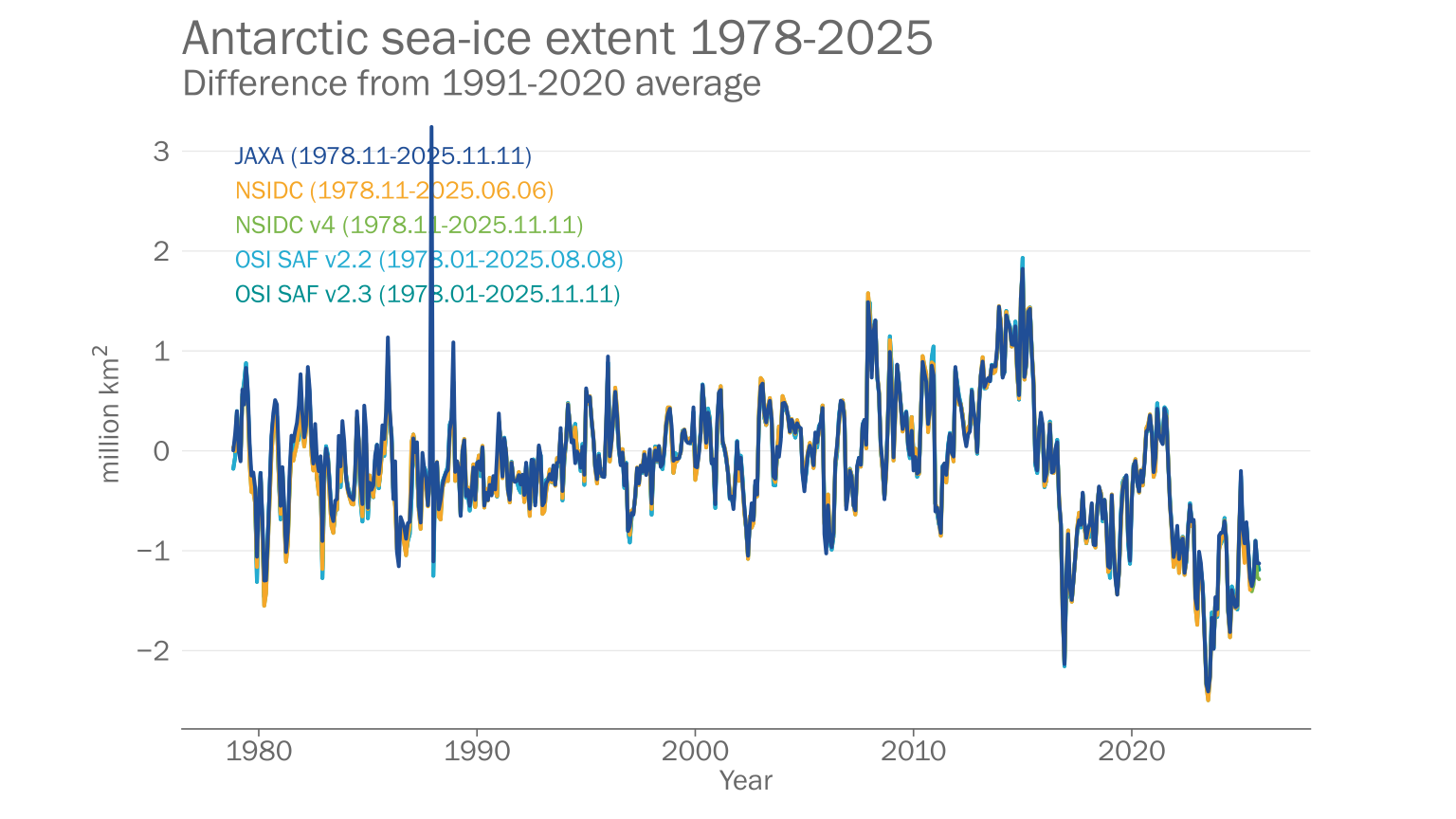
Sea-ice concentrations are estimated from microwave radiances measured from satellites (from 1979). Sea-ice extent is calculated as the area of ocean grid cells where the sea-ice concentration exceeds 15%. Although there are relatively large differences in the absolute extent between data sets, they agree well on the year-to-year changes and the trends.
The data in the above plot are available in a zip file containing a csv file for each data set.
Data file: Antarctic_sea_ice_data_files.zip
Checksum: c73d8676441b118d77a419da629cd3f0
Format: BADC CSV format
JAXA
Original data file (external link)
To produce the plot, the following processing steps were performed:
- Data set created from file ['JASMES_CLIMATE_SIE_5DAVG_PS_SHM.txt'] downloaded from ['ftp://apollo.eorc.jaxa.jp/pub/JASMES/Polar_XXkm/sie/'] at ['2026-01-05 11:07:20']
- Calculated monthly average from values using arithmetic mean of all dates that fall within each month
- Rebaselined to 1991-2020 for each month separately by calculating the arithmetic mean of the data over the baseline period and subtracting the mean from all data values. This is done for each month separately (Januarys, Februarys etc).
NSIDC v4
Original data file (external link) Original data file (external link) Original data file (external link) Original data file (external link) Original data file (external link) Original data file (external link) Original data file (external link) Original data file (external link) Original data file (external link) Original data file (external link) Original data file (external link) Original data file (external link)
Data citation: Fetterer, F., K. Knowles, W. N. Meier, M. Savoie, and A. K. Windnagel. 2017, updated daily. Sea Ice Index, Version 3. 1979-present. Boulder, Colorado USA. NSIDC: National Snow and Ice Data Center. doi: https://doi.org/10.7265/N5K072F8. [2026-01-14 14:46:17].
Acknowledgement: Fetterer, F., K. Knowles, W. N. Meier, M. Savoie, and A. K. Windnagel. 2017, updated daily. Sea Ice Index, Version 3. 1979-present. Boulder, Colorado USA. NSIDC: National Snow and Ice Data Center. doi: https://doi.org/10.7265/N5K072F8. [2026-01-14 14:46:17].
To produce the plot, the following processing steps were performed:
- Data set created from file ['S_01_extent_v4.0.csv', 'S_02_extent_v4.0.csv', 'S_03_extent_v4.0.csv', 'S_04_extent_v4.0.csv', 'S_05_extent_v4.0.csv', 'S_06_extent_v4.0.csv', 'S_07_extent_v4.0.csv', 'S_08_extent_v4.0.csv', 'S_09_extent_v4.0.csv', 'S_10_extent_v4.0.csv', 'S_11_extent_v4.0.csv', 'S_12_extent_v4.0.csv'] downloaded from ['ftp://sidads.colorado.edu/DATASETS/NOAA/G02135/south/monthly/data/S_01_extent_v4.0.csv', 'ftp://sidads.colorado.edu/DATASETS/NOAA/G02135/south/monthly/data/S_02_extent_v4.0.csv', 'ftp://sidads.colorado.edu/DATASETS/NOAA/G02135/south/monthly/data/S_03_extent_v4.0.csv', 'ftp://sidads.colorado.edu/DATASETS/NOAA/G02135/south/monthly/data/S_04_extent_v4.0.csv', 'ftp://sidads.colorado.edu/DATASETS/NOAA/G02135/south/monthly/data/S_05_extent_v4.0.csv', 'ftp://sidads.colorado.edu/DATASETS/NOAA/G02135/south/monthly/data/S_06_extent_v4.0.csv', 'ftp://sidads.colorado.edu/DATASETS/NOAA/G02135/south/monthly/data/S_07_extent_v4.0.csv', 'ftp://sidads.colorado.edu/DATASETS/NOAA/G02135/south/monthly/data/S_08_extent_v4.0.csv', 'ftp://sidads.colorado.edu/DATASETS/NOAA/G02135/south/monthly/data/S_09_extent_v4.0.csv', 'ftp://sidads.colorado.edu/DATASETS/NOAA/G02135/south/monthly/data/S_10_extent_v4.0.csv', 'ftp://sidads.colorado.edu/DATASETS/NOAA/G02135/south/monthly/data/S_11_extent_v4.0.csv', 'ftp://sidads.colorado.edu/DATASETS/NOAA/G02135/south/monthly/data/S_12_extent_v4.0.csv'] at ['2026-01-14 14:46:17', '2026-01-14 14:46:18', '2026-01-14 14:46:19', '2026-01-14 14:46:20', '2026-01-14 14:46:21', '2026-01-14 14:46:22', '2026-01-14 14:46:23', '2026-01-14 14:46:24', '2026-01-14 14:46:25', '2026-01-14 14:46:26', '2026-01-14 14:46:28', '2026-01-14 14:46:29']
- Rebaselined to 1991-2020 for each month separately by calculating the arithmetic mean of the data over the baseline period and subtracting the mean from all data values. This is done for each month separately (Januarys, Februarys etc).
OSI SAF v2.3
Original data file (external link)
Citation:
Data citation: EUMETSAT Ocean and Sea Ice Satellite Application Facility, Sea ice index 1979-onwards (v2.1, 2020), OSI-420, Data extracted from OSI SAF FTP server: 1979-present, Northern Hemisphere, accessed 2026-01-14 14:46:29
Acknowledgement: The OSI SAF Sea Ice Index v2.1 is made available at https://osisaf-hl.met.no/v2p1-sea-ice-index. The OSI SAF Sea Ice Index v2p1 is prepared using EUMETSAT OSI SAF Sea Ice Concentration data, with R&D input from the ESA Climate Change Initiative (ESA CCI) (Lavergne et al. 2019)
To produce the plot, the following processing steps were performed:
- Data set created from file ['osisaf_sh_sie_monthly.txt'] downloaded from ['ftp://osisaf.met.no/prod_test/ice/index/v2p3/sh/osisaf_sh_sie_monthly.txt'] at ['2026-01-14 14:46:29']
- Rebaselined to 1991-2020 for each month separately by calculating the arithmetic mean of the data over the baseline period and subtracting the mean from all data values. This is done for each month separately (Januarys, Februarys etc).
Arctic daily sea ice
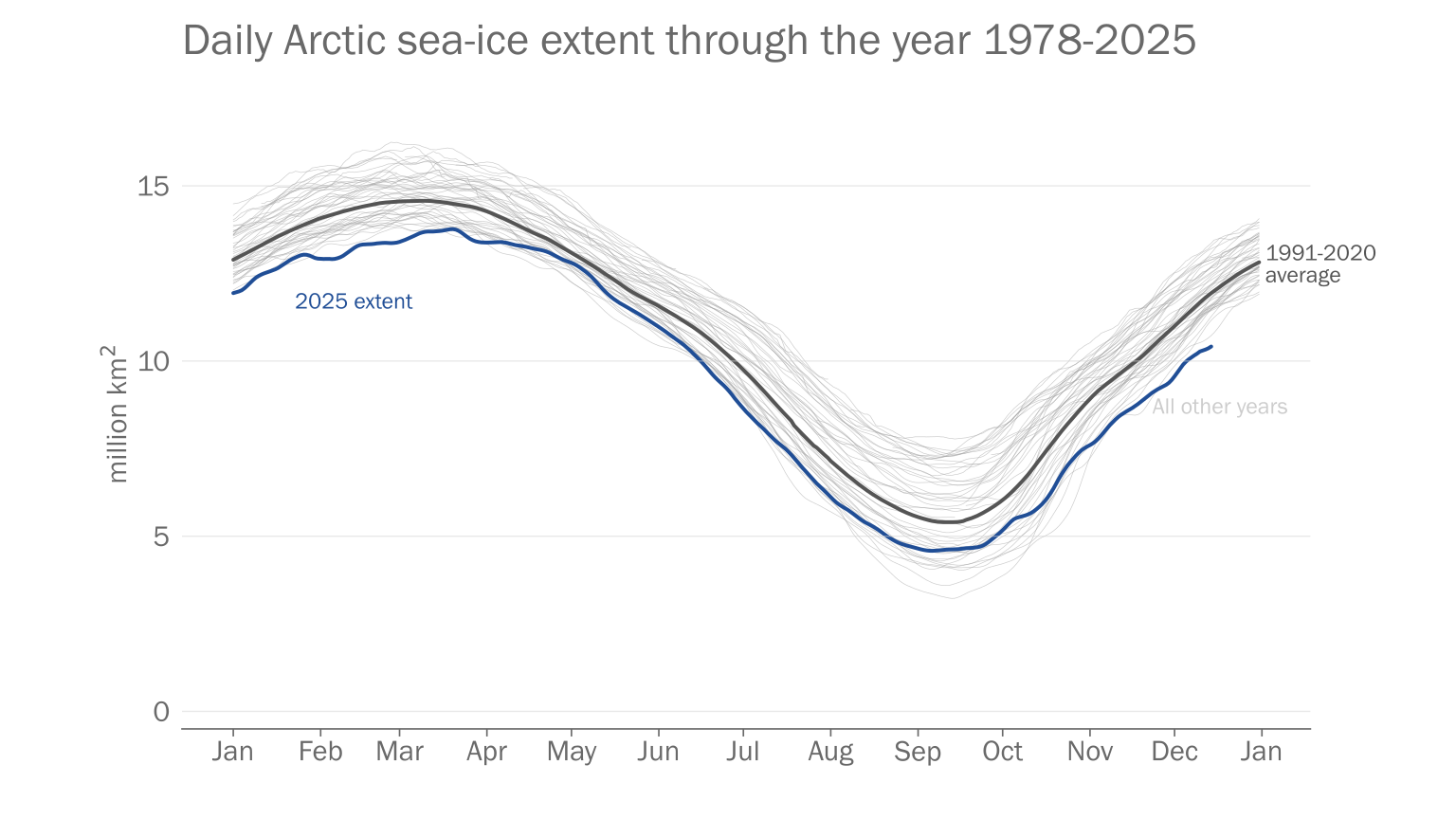
Sea-ice concentrations are estimated from microwave radiances measured from satellites (from 1979). Sea-ice extent is calculated as the area of ocean grid cells where the sea-ice concentration exceeds 15%. Although there are relatively large differences in the absolute extent between data sets, they agree well on the year-to-year changes and the trends.
The data in the above plot are available in a zip file containing a csv file for each data set.
Data file: Arctic_daily_sea_ice_data_files.zip
Checksum: de44ba2da265022cf41fa59ca1008826
Format: BADC CSV format
JAXA
Original data file (external link)
To produce the plot, the following processing steps were performed:
- Data set created from file ['JASMES_CLIMATE_SIE_5DAVG_PS_NHM.txt'] downloaded from ['ftp://apollo.eorc.jaxa.jp/pub/JASMES/Polar_XXkm/sie/'] at ['2026-01-05 11:06:50']
Antarctic daily sea ice
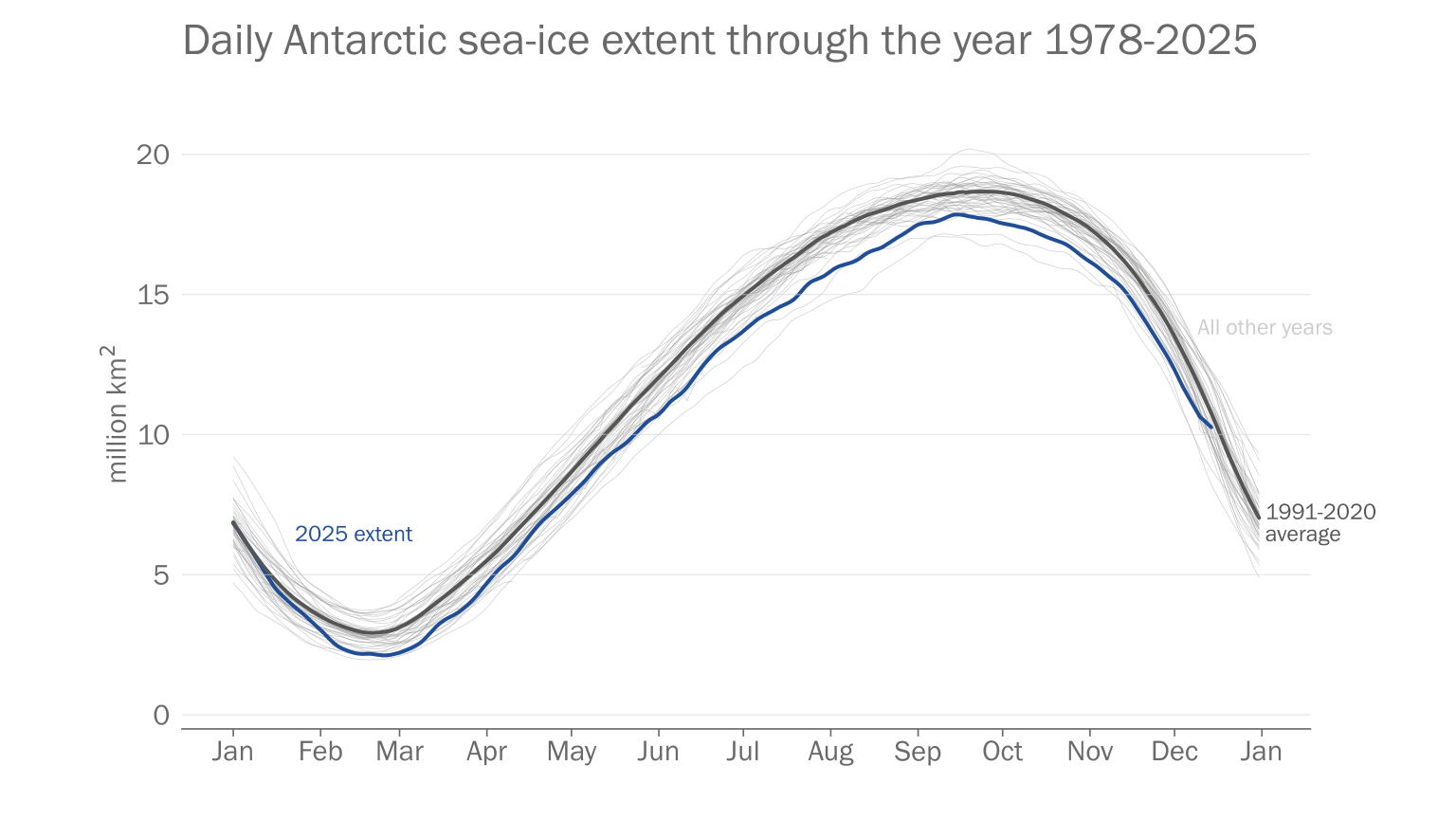
Sea-ice concentrations are estimated from microwave radiances measured from satellites (from 1979). Sea-ice extent is calculated as the area of ocean grid cells where the sea-ice concentration exceeds 15%. Although there are relatively large differences in the absolute extent between data sets, they agree well on the year-to-year changes and the trends.
The data in the above plot are available in a zip file containing a csv file for each data set.
Data file: Antarctic_daily_sea_ice_data_files.zip
Checksum: 3035d518f6c100b44a4a68165f3c3599
Format: BADC CSV format
JAXA
Original data file (external link)
To produce the plot, the following processing steps were performed:
- Data set created from file ['JASMES_CLIMATE_SIE_5DAVG_PS_SHM.txt'] downloaded from ['ftp://apollo.eorc.jaxa.jp/pub/JASMES/Polar_XXkm/sie/'] at ['2026-01-05 11:07:20']
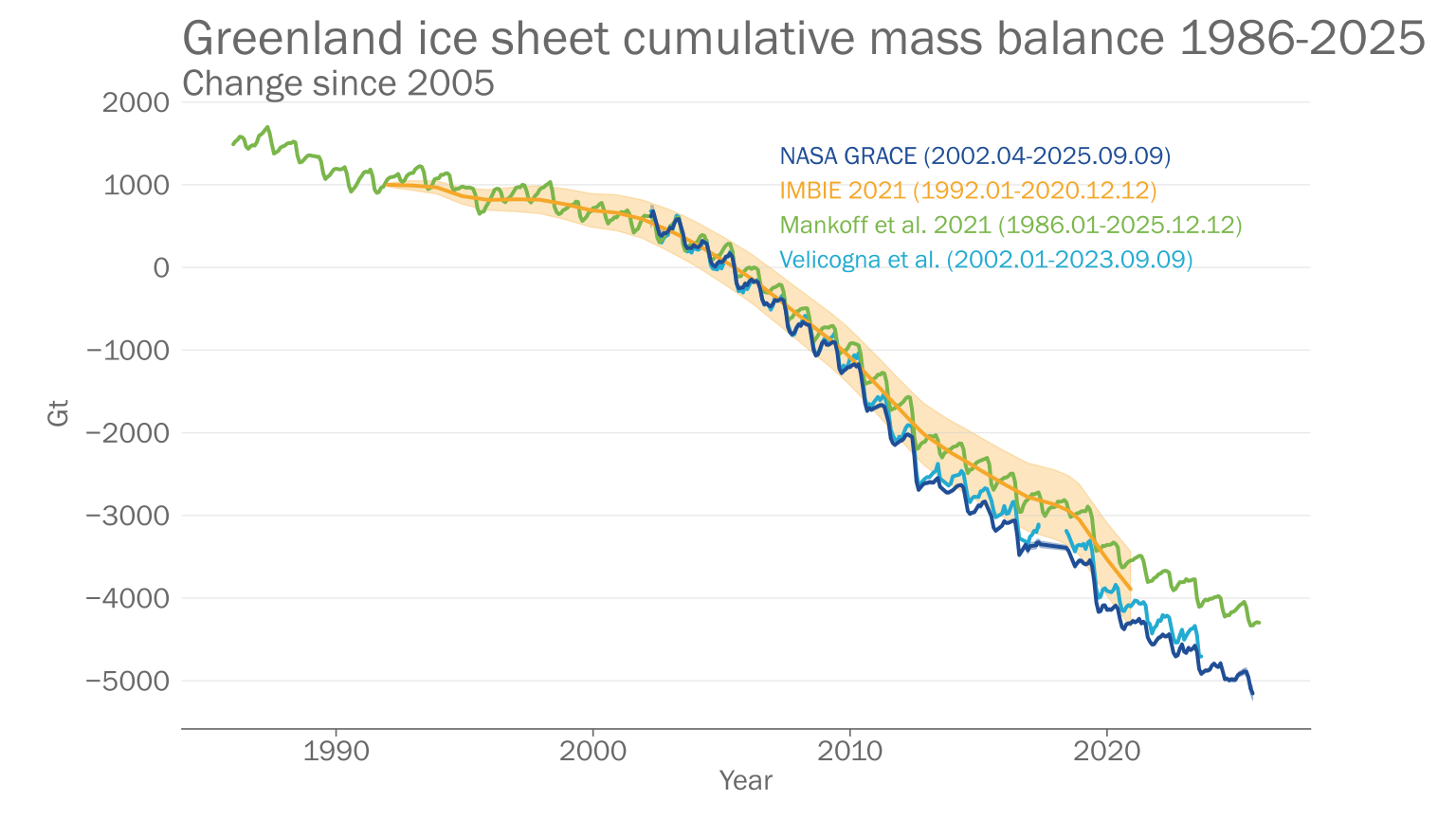
Greenland ice sheet
The Greenland ice sheet mass balance measures the change in ice mass of the Greenland ice sheet. The change in mass is estimated in three principle ways: gravimetric measurements, altimetric measurements and the input-output method. Gravimetric measurements infer mass changes from variations in the Earth's gravitational field as measured by the GRACE and GRACE-FO (Gravity Recovery and Climate Experiment - Follow On) satellites. Altimetric measurements, measured the height of the ice sheet surface, using radar and laser altimeters. Input-output methods, use weather conditions from a numerical weather prediction model, to estimate changes in mass balance at the surface of the ice sheet. These are combined with estimates of mass loss from glaciers around the edge of Greenland and melting on the underside of the glaciers. The IMBIE data set combines over 25 different estimates of Greenland mass balance to get a comprehensive view of the long-term changes.
The data in the above plot are available in a zip file containing a csv file for each data set.
Data file: Greenland_ice_sheet_data_files.zip
Checksum: 402a613a506840cc22d9f978db3b421a
Format: BADC CSV format
NASA GRACE
Original data file (external link)
Citation:
Data citation: Wiese, D. N., D.-N. Yuan, C. Boening, F. W. Landerer, and M. M. Watkins (2019) JPL GRACE and GRACE-FO Mascon Ocean, Ice, and Hydrology Equivalent Water Height RL06M CRI Filtered Version 2.0, Ver. 2.0, PO.DAAC, CA, USA. Dataset accessed [2026-01-14 14:09:10] at http://dx.doi.org/10.5067/TEMSC-3MJ62.
Notes: Data from the GRACE and GRACE-FO JPL RL06Mv2 Mascon Solution
To produce the plot, the following processing steps were performed:
- Data set created from file ['greenland_mass_200204_2026MMMM.txt'] downloaded from ['https://archive.podaac.earthdata.nasa.gov/podaac-ops-cumulus-protected/GREENLAND_MASS_TELLUS_MASCON_CRI_TIME_SERIES_RL06.3_V4/greenland_mass_200204_2026MMMM.txt'] at ['2026-01-14 14:09:10']
- Zeroed series on July 2005 by subtracting the value for that month from all data values (see next entry)
- Added offset of 615.51 to all data values.
- Manually changed baseline to 2005-2005. Note that data values remain unchanged.
IMBIE 2021
Original data file (external link)
Citation:
Data citation: Shepherd, A., Ivins, E., Rignot, E., Smith, B., van den Broeke, M., Velicogna, I., Whitehouse, P., Briggs, K., Joughin, I., Krinner, G., Nowicki, S., Payne, A., Scambos, T., Schlegel, N., A, G., Agosta, C., Ahlstrøm, A., Babonis, G., Barletta, V., … Wuite, J. (2021). Antarctic and Greenland Ice Sheet mass balance 1992-2020 for IPCC AR6 (Version 1.0) [Data set]. UK Polar Data Centre, Natural Environment Research Council, UK Research & Innovation. https://doi.org/10.5285/77B64C55-7166-4A06-9DEF-2E400398E452
To produce the plot, the following processing steps were performed:
- Data set created from file ['imbie_greenland_2021_Gt.csv'] downloaded from ['https://ramadda.data.bas.ac.uk/repository/entry/get/imbie_greenland_2021_Gt.csv?entryid=synth%3A77b64c55-7166-4a06-9def-2e400398e452%3AL2ltYmllX2dyZWVubGFuZF8yMDIxX0d0LmNzdg%3D%3D'] at ['2023-08-07 14:40:20']
- Zeroed series on July 2005 by subtracting the value for that month from all data values (see next entry)
- Added offset of 1000.3866 to all data values.
- Manually changed baseline to 2005-2005. Note that data values remain unchanged.
Mankoff et al. 2021
Original data file (external link)
Citation:
Data citation: https://doi.org/10.22008/FK2/OHI23Z
Notes: Filename should be MB_SMB_D_BMB.csv
To produce the plot, the following processing steps were performed:
- Data set created from file ['MB_SMB_D_BMB.csv'] downloaded from ['https://thredds.geus.dk/thredds/fileServer/MassBalance/MB_SMB_D_BMB.csv'] at ['2026-01-14 14:46:30']
- Zeroed series on July 2005 by subtracting the value for that month from all data values (see next entry)
- Added offset of 1453.376009 to all data values.
- Manually changed baseline to 2005-2005. Note that data values remain unchanged.
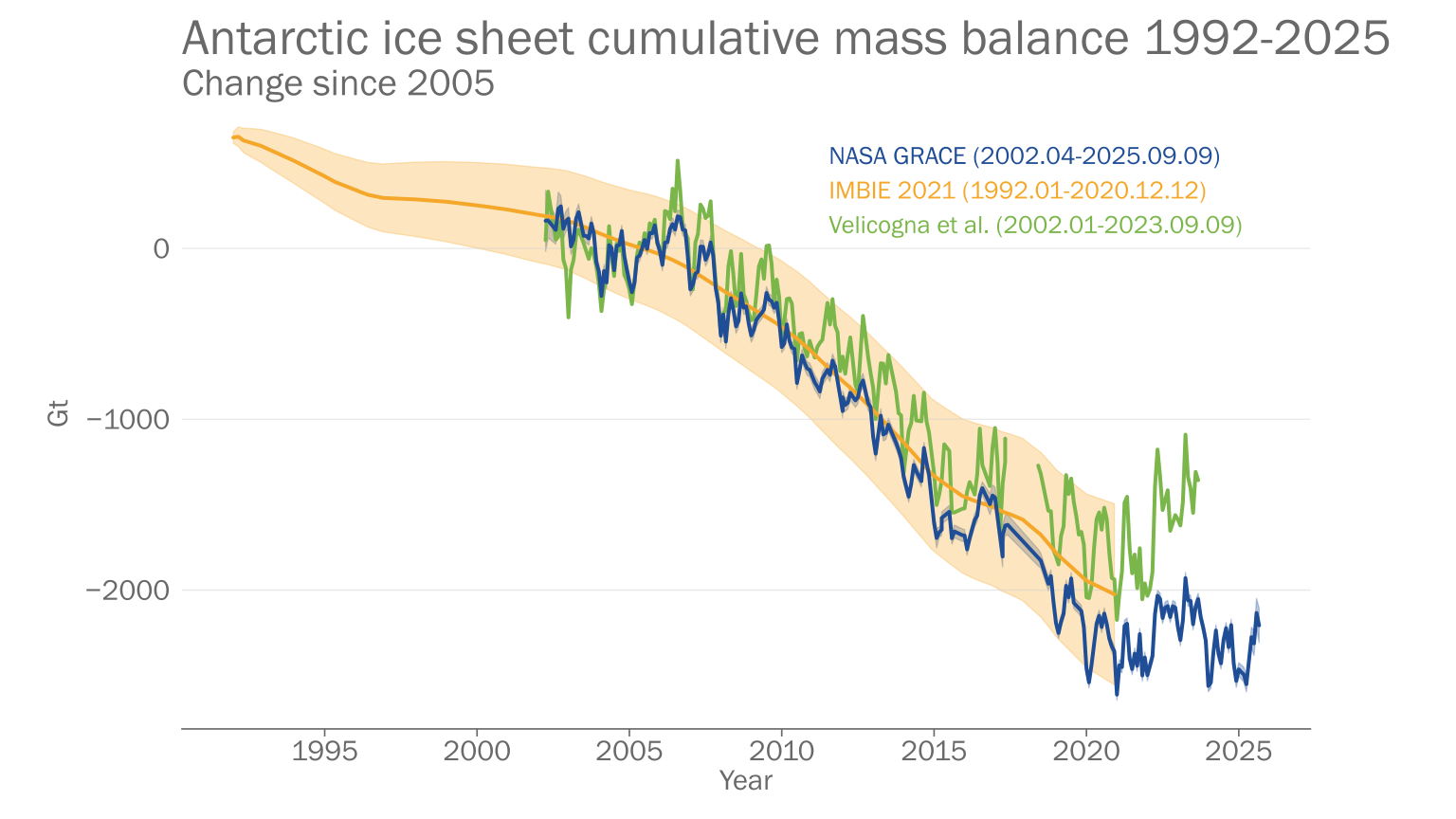
Antarctic ice sheet
The Antarctic ice sheet mass balance measures the change in ice mass of the Antarctic ice sheet. The change in mass is estimated in three principle ways: gravimetric measurements, altimetric measurements and the input-output method. Gravimetric measurements infer mass changes from variations in the Earth's gravitational field as measured by the GRACE and GRACE-FO (Gravity Recovery and Climate Experiment - Follow On) satellites. Altimetric measurements, measured the height of the ice sheet surface, using radar and laser altimeters. Input-output methods, use weather conditions from a numerical weather prediction model, to estimate changes in mass balance at the surface of the ice sheet. These are combined with estimates of mass loss from glaciers around the edge of the continent and melting on the underside of the glaciers. The IMBIE data set combines many estimates of Antarctic mass balance to get a comprehensive view of the long-term changes.
The data in the above plot are available in a zip file containing a csv file for each data set.
Data file: Antarctic_ice_sheet_data_files.zip
Checksum: d06ecc54ba7a5006e0d33f377e753a76
Format: BADC CSV format
NASA GRACE
Original data file (external link)
Citation:
Data citation: Wiese, D. N., D.-N. Yuan, C. Boening, F. W. Landerer, and M. M. Watkins (2019) JPL GRACE and GRACE-FO Mascon Ocean, Ice, and Hydrology Equivalent Water Height RL06M CRI Filtered Version 2.0, Ver. 2.0, PO.DAAC, CA, USA. Dataset accessed [2026-01-14 14:09:32] at http://dx.doi.org/10.5067/TEMSC-3MJ62.
Notes: Data from the GRACE and GRACE-FO JPL RL06Mv2 Mascon Solution
To produce the plot, the following processing steps were performed:
- Data set created from file ['antarctica_mass_200204_2026MMMM.txt'] downloaded from ['https://archive.podaac.earthdata.nasa.gov/podaac-ops-cumulus-protected/ANTARCTICA_MASS_TELLUS_MASCON_CRI_TIME_SERIES_RL06.3_V4/antarctica_mass_200204_2026MMMM.txt'] at ['2026-01-14 14:09:32']
- Zeroed series on June 2005 by subtracting the value for that month from all data values (see next entry)
- Added offset of 162.11 to all data values.
- Manually changed baseline to 2005-2005. Note that data values remain unchanged.
IMBIE 2021
Original data file (external link)
Citation:
Data citation: Shepherd, A., Ivins, E., Rignot, E., Smith, B., van den Broeke, M., Velicogna, I., Whitehouse, P., Briggs, K., Joughin, I., Krinner, G., Nowicki, S., Payne, A., Scambos, T., Schlegel, N., A, G., Agosta, C., Ahlstrøm, A., Babonis, G., Barletta, V., … Wuite, J. (2021). Antarctic and Greenland Ice Sheet mass balance 1992-2020 for IPCC AR6 (Version 1.0) [Data set]. UK Polar Data Centre, Natural Environment Research Council, UK Research & Innovation. https://doi.org/10.5285/77B64C55-7166-4A06-9DEF-2E400398E452
To produce the plot, the following processing steps were performed:
- Data set created from file ['imbie_antarctica_2021_Gt.csv'] downloaded from ['https://ramadda.data.bas.ac.uk/repository/entry/get/imbie_antarctica_2021_Gt.csv?entryid=synth%3A77b64c55-7166-4a06-9def-2e400398e452%3AL2ltYmllX2FudGFyY3RpY2FfMjAyMV9HdC5jc3Y%3D'] at ['2023-08-07 14:40:19']
- Zeroed series on June 2005 by subtracting the value for that month from all data values (see next entry)
- Added offset of 646.1411 to all data values.
- Manually changed baseline to 2005-2005. Note that data values remain unchanged.
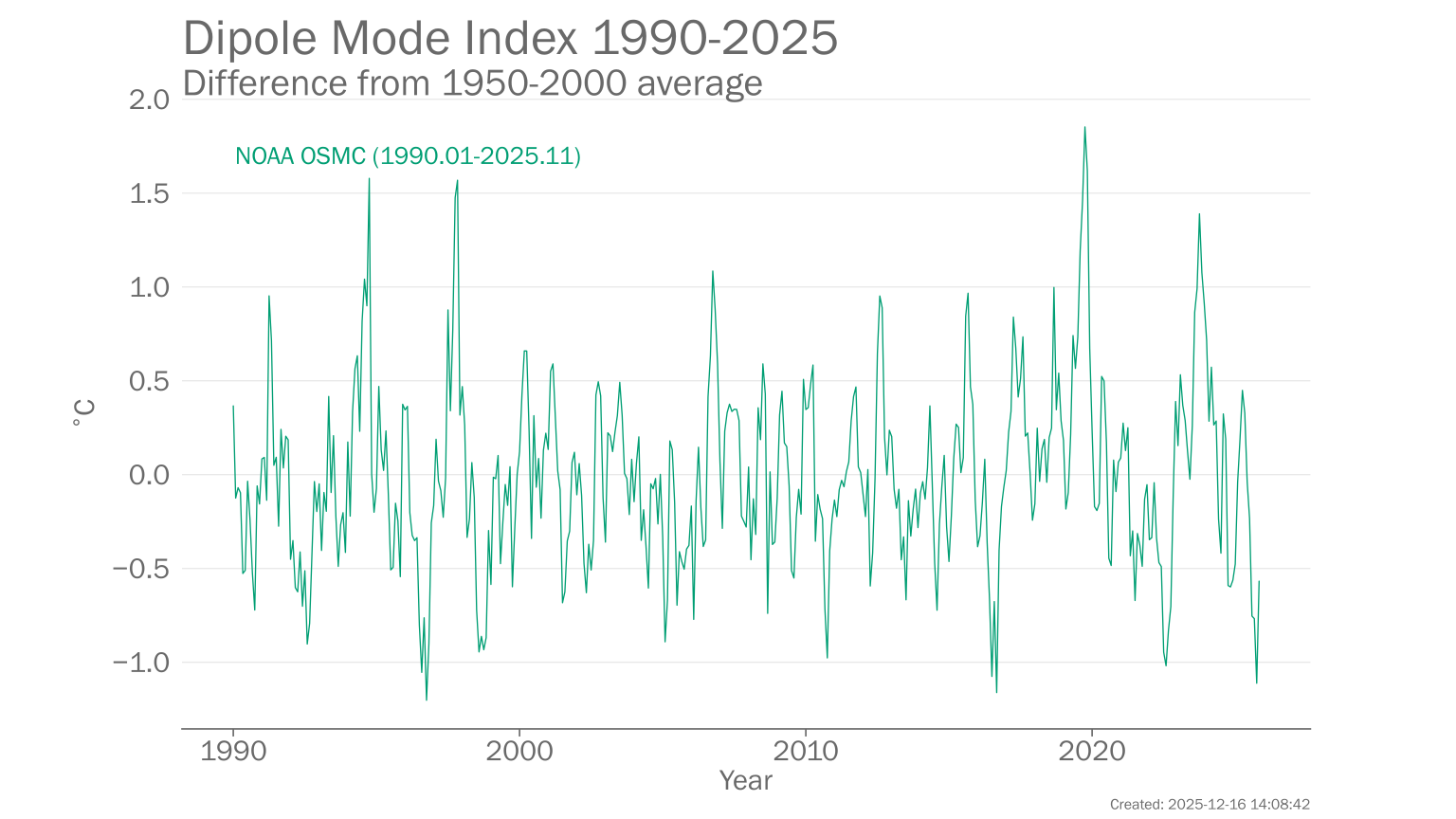
Indian Ocean Dipole
The data in the above plot are available in a zip file containing a csv file for each data set.
Data file: Indian_Ocean_Dipole_data_files.zip
Checksum: 58b5bf8923ca724384d849447d589e7b
Format: BADC CSV format
NOAA OSMC
Original data file (external link)
To produce the plot, the following processing steps were performed:
- Data set created from file ['dmi.nc'] downloaded from ['https://stateoftheocean.osmc.noaa.gov/sur/data/dmi.nc'] at ['2026-01-14 14:46:36']
- Calculated monthly average from values using arithmetic mean of all dates that fall within each month
- Selected years within the range 1990 to 2025.
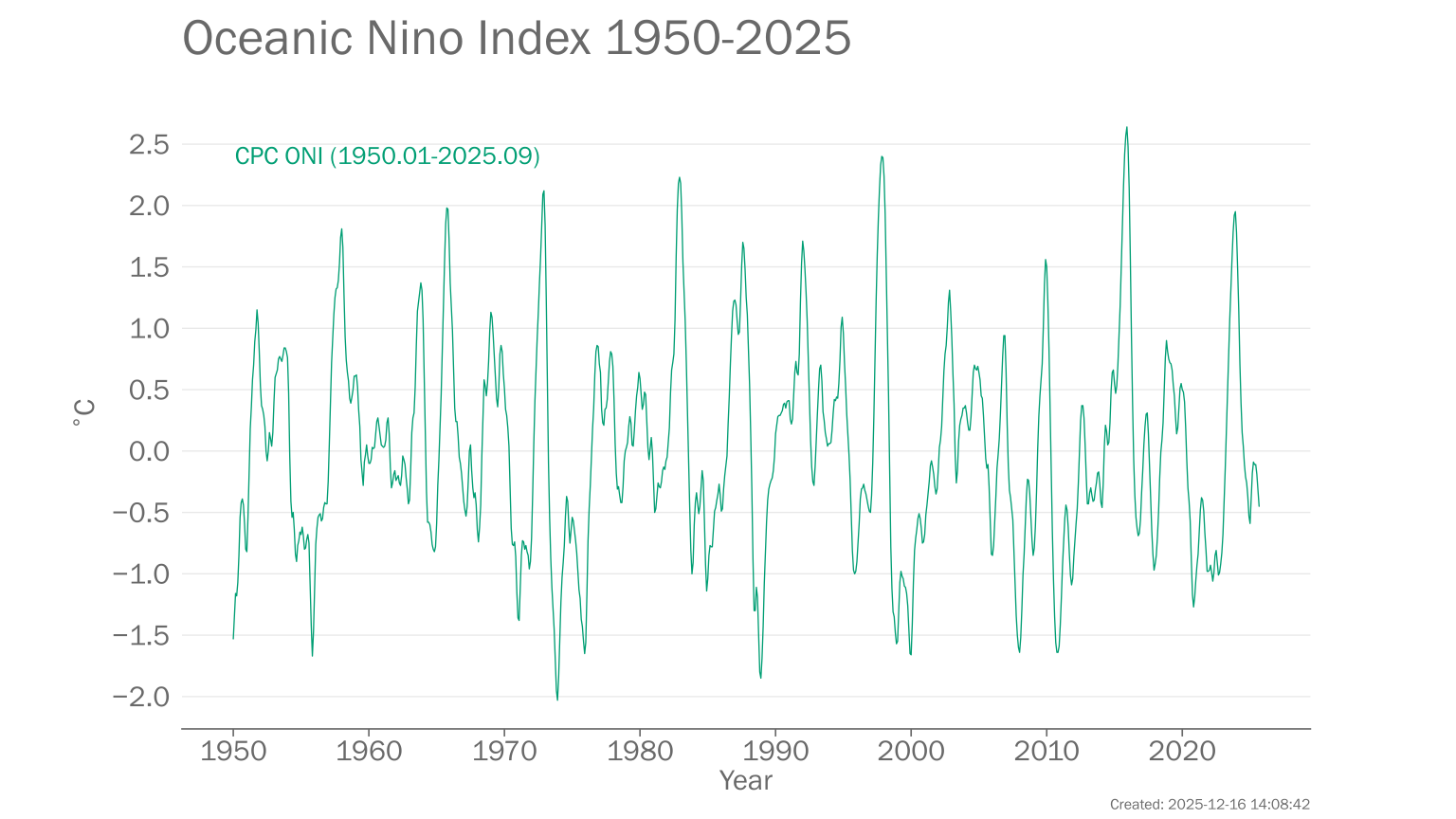
ONI
The data in the above plot are available in a zip file containing a csv file for each data set.
Data file: ONI_data_files.zip
Checksum: daec62b06a468dacf5d1e2c2499da12c
Format: BADC CSV format
CPC ONI
Original data file (external link)
To produce the plot, the following processing steps were performed:
- Data set created from file ['oni.data'] downloaded from ['https://psl.noaa.gov/data/correlation/oni.data'] at ['2026-01-14 14:46:36']
- Selected years within the range 1950 to 2025.
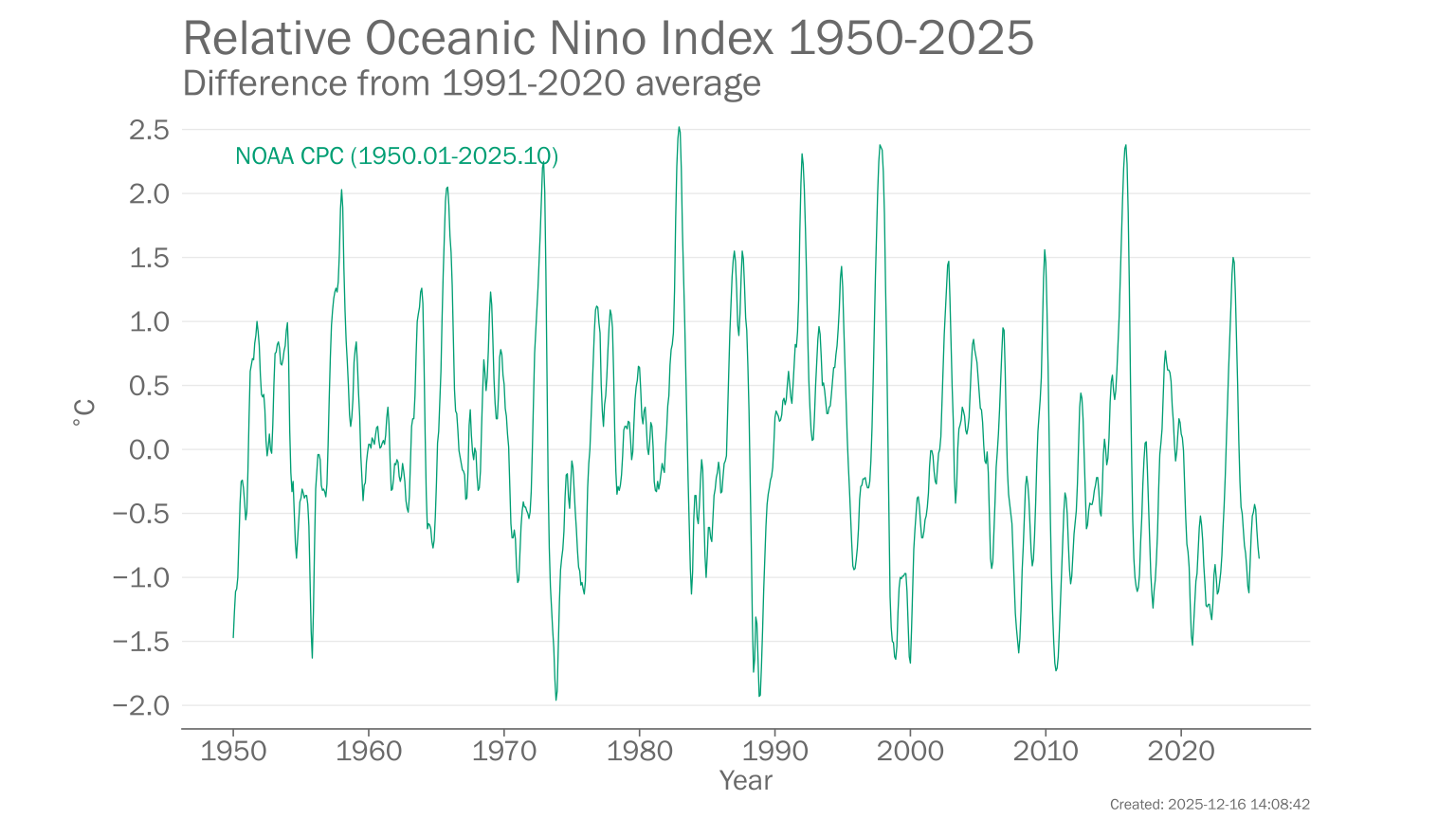
Relative ONI
The data in the above plot are available in a zip file containing a csv file for each data set.
Data file: Relative_ONI_data_files.zip
Checksum: 31885ebd83303e1e4ed1f4388f6527d5
Format: BADC CSV format
NOAA CPC
Original data file (external link)
Citation:
To produce the plot, the following processing steps were performed:
- Data set created from file ['RONI.ascii.txt'] downloaded from ['https://www.cpc.ncep.noaa.gov/data/indices/RONI.ascii.txt'] at ['2026-01-14 14:46:33']
- Selected years within the range 1950 to 2025.
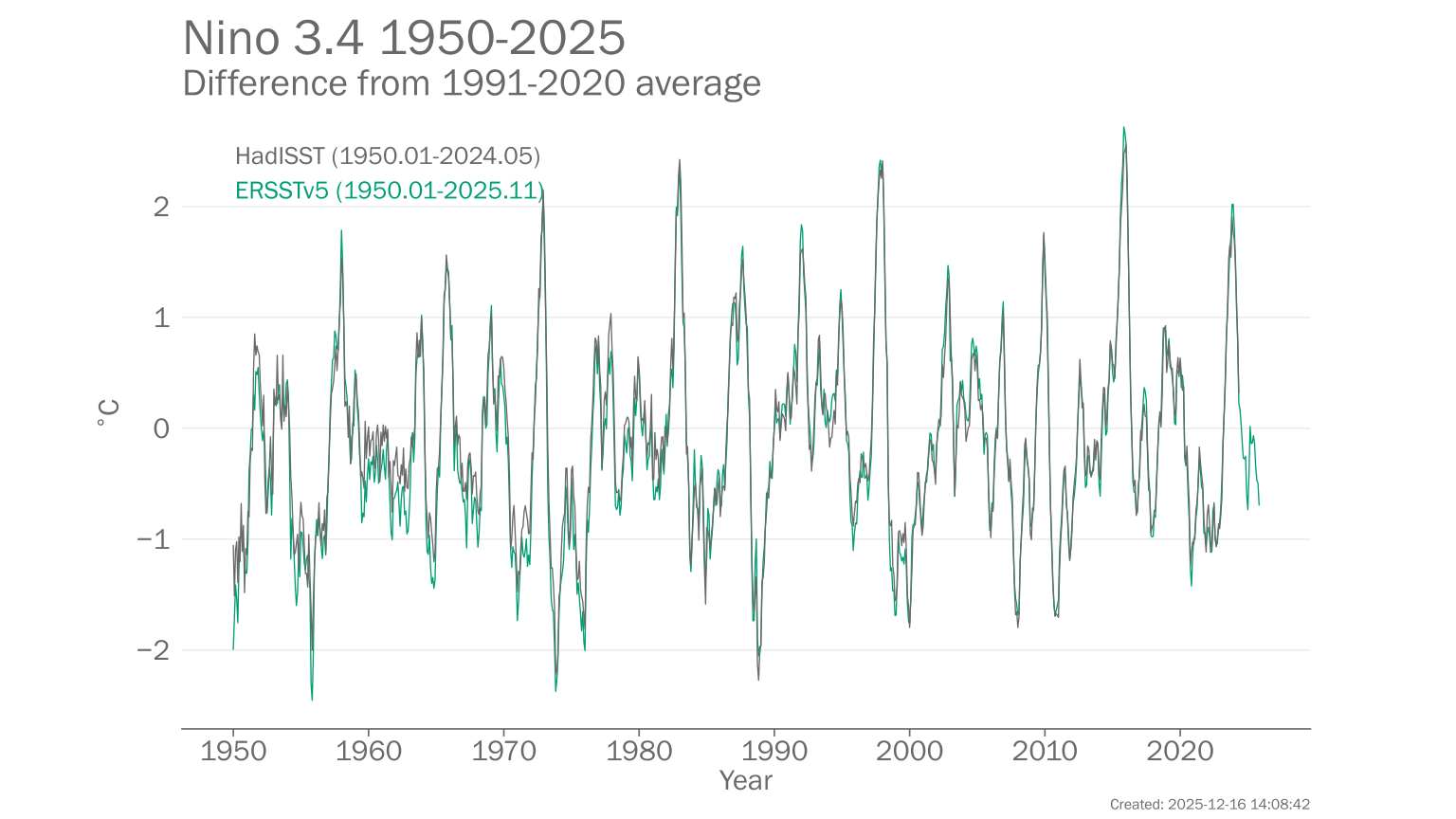
ENSO
The data in the above plot are available in a zip file containing a csv file for each data set.
Data file: ENSO_data_files.zip
Checksum: e73ae9834ba08647bf13fdf243e15d5a
Format: BADC CSV format
ERSSTv5
Original data file (external link)
To produce the plot, the following processing steps were performed:
- Data set created from file ['nina34.data'] downloaded from ['https://psl.noaa.gov/data/correlation/nina34.data'] at ['2026-01-14 14:46:37']
- Rebaselined to 1991-2020 for each month separately by calculating the arithmetic mean of the data over the baseline period and subtracting the mean from all data values. This is done for each month separately (Januarys, Februarys etc).
- Selected years within the range 1950 to 2025.
HadISST
Original data file (external link)
To produce the plot, the following processing steps were performed:
- Data set created from file ['nino34.long.data'] downloaded from ['https://psl.noaa.gov/gcos_wgsp/Timeseries/Data/nino34.long.data'] at ['2024-11-27 10:47:43']
- Rebaselined to 1991-2020 for each month separately by calculating the arithmetic mean of the data over the baseline period and subtracting the mean from all data values. This is done for each month separately (Januarys, Februarys etc).
- Selected years within the range 1950 to 2025.
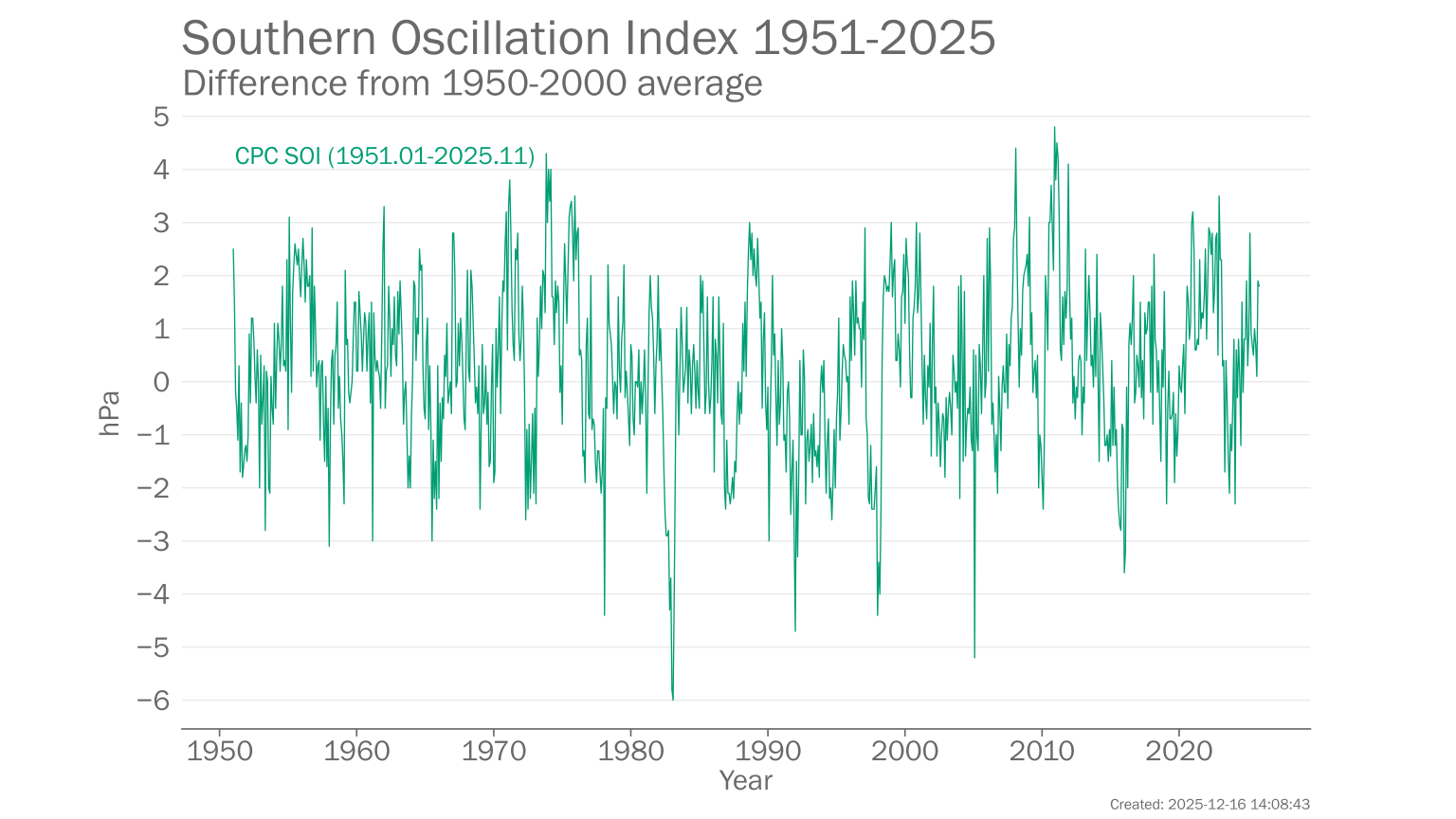
SOI
The data in the above plot are available in a zip file containing a csv file for each data set.
Data file: SOI_data_files.zip
Checksum: 5aeea6d50b3f4d650ed47e8ff3fe74e0
Format: BADC CSV format
CPC SOI
Original data file (external link)
To produce the plot, the following processing steps were performed:
- Data set created from file ['soi.data'] downloaded from ['https://psl.noaa.gov/data/correlation/soi.data'] at ['2026-01-14 14:46:37']
- Selected years within the range 1950 to 2025.
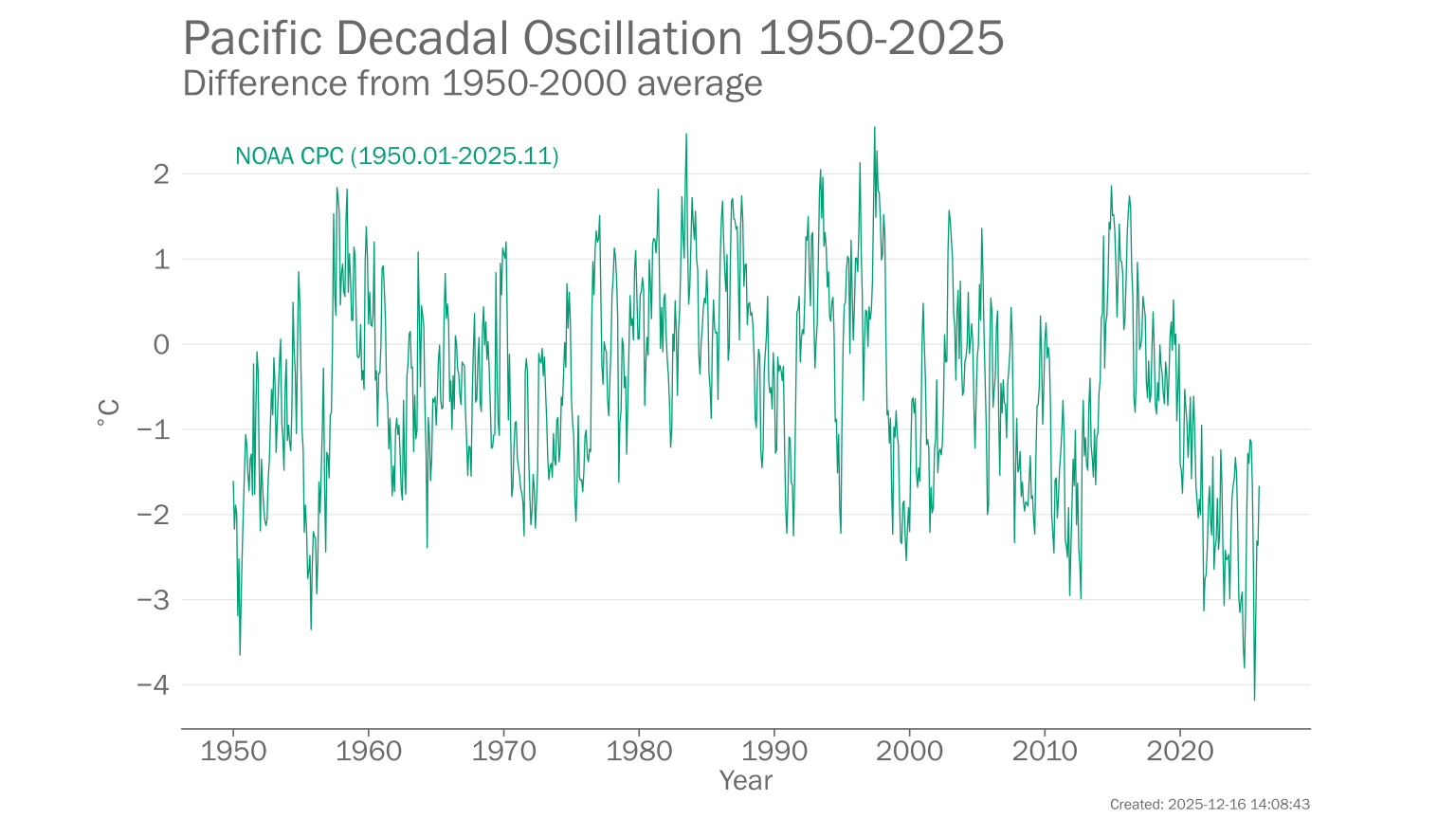
Pacific Decadal Oscillation
The data in the above plot are available in a zip file containing a csv file for each data set.
Data file: Pacific_Decadal_Oscillation_data_files.zip
Checksum: b809e4fde2dbaeb0dce5c44a241394f4
Format: BADC CSV format
NOAA CPC
Original data file (external link)
Citation:
To produce the plot, the following processing steps were performed:
- Data set created from file ['ersst.v5.pdo.dat'] downloaded from ['https://www.ncei.noaa.gov/pub/data/cmb/ersst/v5/index/ersst.v5.pdo.dat'] at ['2026-01-14 14:46:33']
- Selected years within the range 1950 to 2025.
Arctic Oscillation
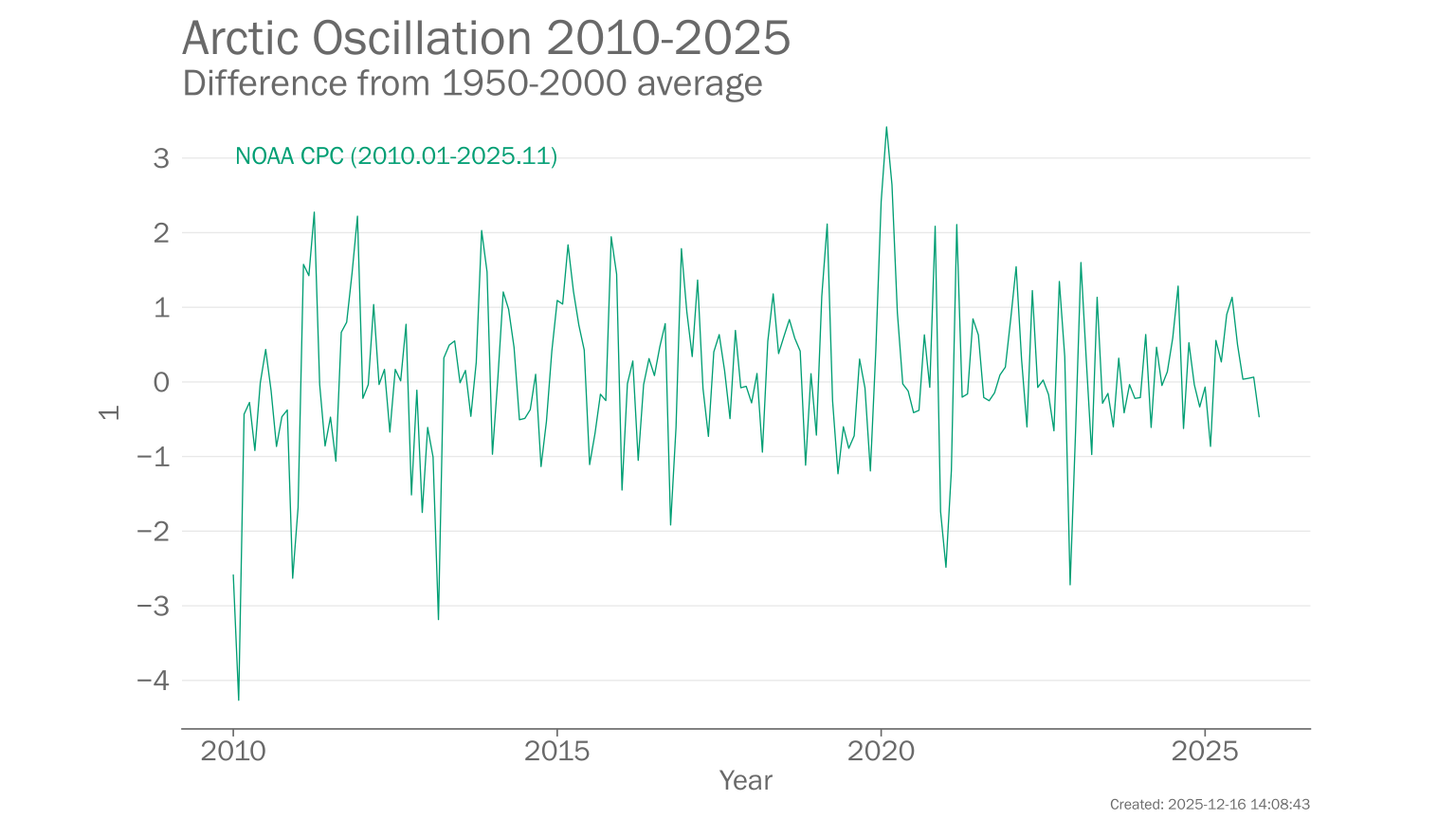
The data in the above plot are available in a zip file containing a csv file for each data set.
Data file: Arctic_Oscillation_data_files.zip
Checksum: 80aec837101cf0885247ea2ffa93561f
Format: BADC CSV format
NOAA CPC
Original data file (external link)
Citation:
To produce the plot, the following processing steps were performed:
- Data set created from file ['monthly.ao.index.b50.current.ascii.table'] downloaded from ['https://www.cpc.ncep.noaa.gov/products/precip/CWlink/daily_ao_index/monthly.ao.index.b50.current.ascii.table'] at ['2026-01-14 14:46:31']
- Selected years within the range 2010 to 2025.
Antarctic Oscillation
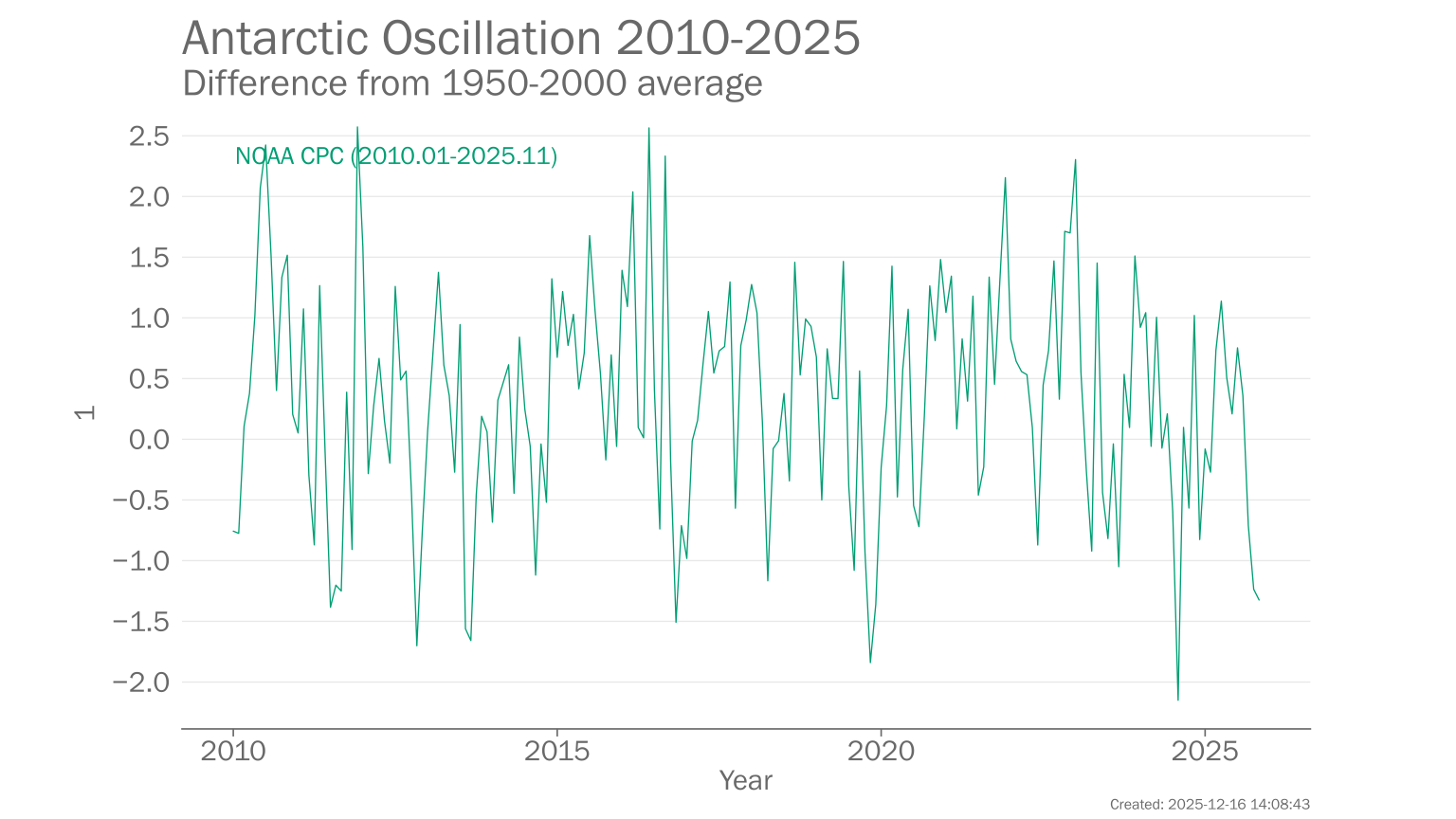
The data in the above plot are available in a zip file containing a csv file for each data set.
Data file: Antarctic_Oscillation_data_files.zip
Checksum: 0f24153a72963dd87482ce75466d307c
Format: BADC CSV format
NOAA CPC
Original data file (external link)
Citation:
To produce the plot, the following processing steps were performed:
- Data set created from file ['monthly.aao.index.b79.current.ascii.table'] downloaded from ['https://www.cpc.ncep.noaa.gov/products/precip/CWlink/daily_ao_index/aao/monthly.aao.index.b79.current.ascii.table'] at ['2026-01-14 14:46:31']
- Selected years within the range 2010 to 2025.
Page created on 2026-01-14 using climind v1.3.0